
On March 2, a few days after the U.S. and Israel bombed Iran on Feb. 28, around 300 protestors gathered to demand an immediate end to the war and U.S. divestment from conflict in Israel and throughout the region. The U.S./Israel airstrikes marked the beginning of a war in the Middle East on multiple fronts that has already killed more than 800 people (as of March 3).
The protest, organized by a loose coalition of close to 30 activist organizations, began at 5 p.m. at Columbus Circle, just a block from Fordham’s Lincoln Center campus, and consisted of approximately 40 minutes of chants and speeches before the group marched down to 5th Avenue and through Midtown.
President Donald Trump justified the attacks in his Feb. 28 announcement that the United States would launch “major combat operations” in Iran by accusing the nation of building nuclear missiles that could reach the U.S. and endanger U.S. allies.
“It has always been the policy of the United States — in particular, my administration — that this terrorist regime can never have a nuclear weapon. … (Iran has) rejected every opportunity to renounce their nuclear ambitions, and we can’t take it anymore,” Trump said.
The interests that the United States is protecting by this war on Iran is not that of the Americans. It is the interest of a tiny elite. Gabriela Silva, Activist and protest organizer
Trump has estimated the conflict may last four to five weeks and possibly longer.
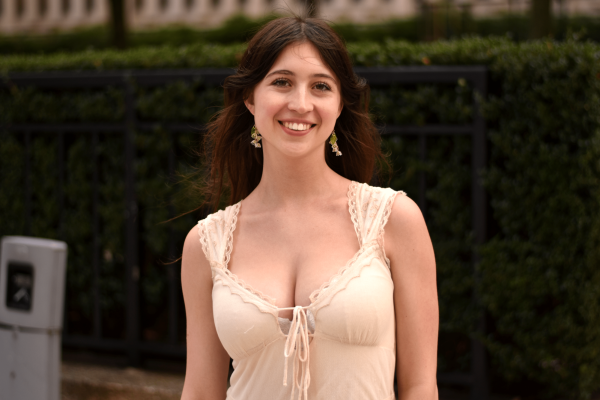
Gabriela Silva, an organizer and activist, spoke at the protest and emphasized her belief that the war in Iran does not reflect the interests of the American people. This was in response to Defense Secretary Pete Hegseth’s remarks that the war is about “ending the threat once and for all” and “protecting American interests and our allies.”
“The interests that the United States is protecting by this war on Iran is not that of the Americans. It is the interest of a tiny elite,” Silva said. “The people of the United States do not want another U.S. war. The people of the United States want to see the over $1 trillion spent on war, death and destruction to be spent on sustaining life.”
Silva went on to discuss a broader desire for the reinvestment of U.S. military spending into healthcare, education and other civic goods. She also criticized other recent U.S. foreign policy, including the blockade on Cuba and U.S. intervention in Venezuela. This sentiment, which Silva called an “internationalist movement of solidarity,” was widely shared by protestors, many of whom also have organized and attended pro-Palestinian demonstrations.
Nuclear talks between the U.S. and Iran had been ongoing for weeks, and the Omani Foreign Minister said on Friday, just hours before the strikes, that they had made “substantial progress.” Negotiations have focused on the nation’s enrichment of its uranium stores. CBS reported that Iran has enriched uranium to “near-weapons grade level” in recent years, and Trump envoy Steve Witkoff said on Monday that Iran has enough enriched uranium to create 11 nuclear bombs.
Trump has outlined several objectives for the war, which include destroying Iran’s missile capabilities and navy and enacting a regime change. This marks a reversal from Trump’s campaign promises for peace and long-standing criticism of foreign entanglements.
However, the claim that Iran posed any kind of imminent threat to the U.S. has been contested by a number of politicians, news sources and nuclear weapons experts. A May 2025 press release by the Defense Intelligence Agency claimed that Iran would not be able to develop long-range ballistic missiles until 2035.
Several officials of the Trump administration have offered differing perspectives on the imminence of the threat Iran posed. Chants at the protest rejected the claim entirely.
“The biggest threat in the world today: Donald Trump and the USA,” the chants said. “Money for jobs and education, not for war and occupation. … We want justice, you say ‘How?’ Hands off Iran now.”
Some protesters held signs bearing statements like, “No more war for big oil profits!” and “Defend Iran against the U.S./Israel war.”
Trump has outlined several objectives for the war, which include destroying Iran’s missile capabilities and navy and enacting a regime change. This marks a reversal from Trump’s campaign promises for peace and long-standing criticism of foreign entanglements.
The U.S. has destroyed the majority of Iran’s naval assets, having sunk nine warships so far, Trump claimed. An Israeli strike killed Ayatollah Ali Khamenei, Iran’s supreme leader, on Feb. 28 — a controversial action that has sparked responses from world leaders and mixed reactions within Iran, with crowds taking to the streets in mass displays of celebration and grief.
Khamenei’s death marks an escalation of the conflict, which has spread across the Middle East. The U.S. has shut its embassies in Saudi Arabia, Kuwait and Lebanon. Hezbollah, the Iranian-allied militia in Lebanon, attacked Israel on March 2, sparking a wave of retaliatory attacks that have caused widespread displacement across Lebanon. Kuwait shot down three American planes in what the U.S. called a “friendly fire incident,” and Dubai has suffered Iranian airstrikes against its international airport, a hotel and other infrastructure.
Mohammad Ehsan Khatami, an organizer with No Tech for Apartheid who identified himself as a Persian-American, spoke at the protest in criticism of the idea that Iranians like himself support the bombing of their nation.
Khatami expressed hope for the coming midterm elections and grassroots organizing as opportunities for a shift in U.S. foreign policy in the Middle East. Silva shared a similar view on the power of the people, saying an end to the war “will take the millions of people that have been expressing discontent with the United States’ foreign policy to be a part of this movement.”
The March 2 demonstration is a part of a series of protests related to the conflict in Iran in New York City this week. A smaller iteration of the March 2 protest was held on Feb. 28, while a separate demonstration calling for a regime change in Iran also took place in Times Square on March 2. Nearly 1000 people marched through Midtown as part of a National Day of Action on Feb. 28.