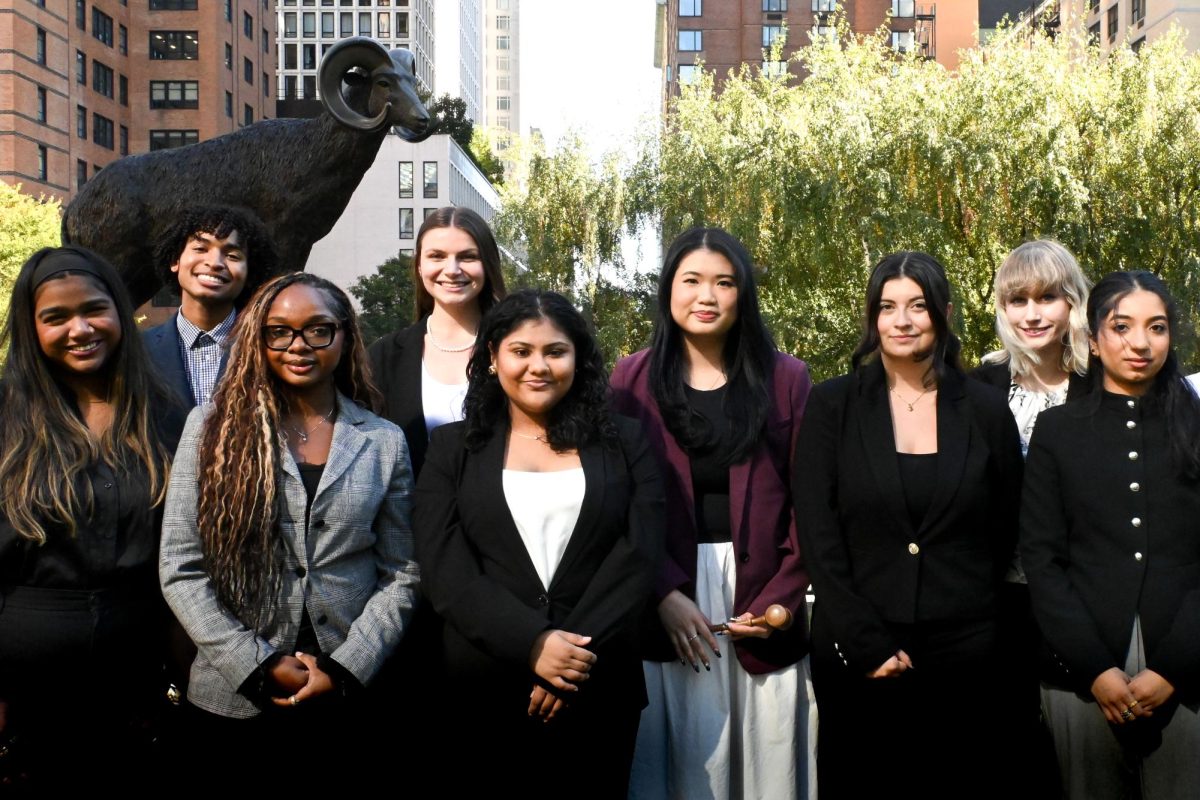
As the spring semester comes to a close, Fordham Lincoln Center’s (FLC) United Student Government (USG) reflected on the progression of their fall initiatives. Efforts by this year’s E-board will fuel USG’s ongoing focus on community outreach, publicity and transparency.
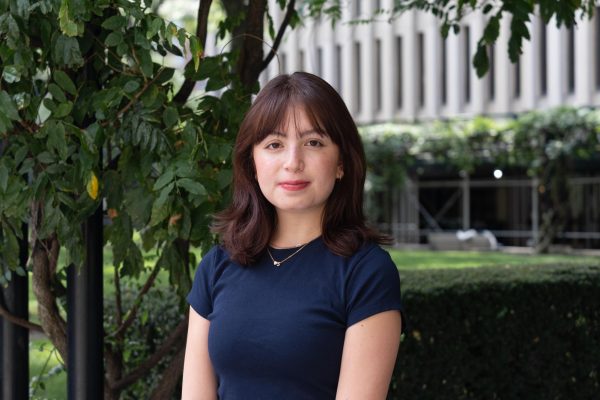
Daphne Mei, Fordham College at Lincoln Center (FCLC) ’26, served as president of USG for the 2025-26 academic year. Mei looked back on her campaign promises and discussed the progress USG made during her final year at Fordham. She was especially excited about the success USG experienced since creating new committees, which allow them to better delegate their responsibilities and foster collaboration.
“There’s a lot of things I’m proud of, but I would say the restructuring of USG was what I’m really proud of because I think students were able to find a sense of community within student government,” Mei said.
Community building drove several of USG’s initiatives this semester.
Mei pointed to the Club Operations Committee as an example of USG’s recent emphasis on connecting with students. The committee began posting newly approved clubs earlier this spring to promote the various new student groups created under USG’s jurisdiction.
USG has six executive committees: Media Relations, Club Operations, Facilities, Diversity, Equity and Inclusion, Committee on Sexual Misconduct, Student Affairs, External Outreach and Humanitarian Needs.
Community building drove several of USG’s initiatives this semester. In the fall, USG announced their plans to hold tabling events allowing their class senators to connect with students, establish a Media Relations Committee and create a website to provide more accessible resources to students and student clubs. These first two items have been implemented, while the website is still under construction.
Mia Paolicelli, FCLC ’28, is the chair of USG’s Media Relations Committee, which was created to expand USG’s marketing, ensuring students are aware of the work USG does “behind the scenes.” Paolicelli said the committee allows USG to “focus on how (they) interact with our community” and ensure “that USG is serving the student body as best as (they) can.”
“It’s been really amazing in the past year under our current leadership to just see how much they care and how much they just want to hear from the student body. That’s always the goal: Do what you do best and put these thoughts into tangible action.” Mia Paolicelli, FCLC ’28
Paolicelli espoused the effectiveness of the new senator tablings, which give students the opportunity to bring feedback directly to their class senators. For example, she noted that a first-year student inspired the MTA discount initiative (USG’s ongoing campaign for discounted train fares) when the student brought the affordability issue to their USG class senator.
USG recently issued a survey to students to gauge interest in and need for MTA discounts in order to communicate “to the administration and (to) the higher-ups so that they understand where things are coming from and that this is a real problem to address,” according to Paolicelli.
“It’s been really amazing in the past year under our current leadership to just see how much they care and how much they just want to hear from the student body. That’s always the goal: Do what you do best and put these thoughts into tangible action,” Paolicelli said.
One tangible example of this goal is the napping pod, which, after a year of talks with Counseling and Psychological Services and the Commuter Students Association, is now approved and underway. Mei hopes that it will be officially established on campus for the coming semester.
Mei and Paolicelli both expressed their enthusiasm for how USG’s has increased their engagement this academic year. Each particularly noted the success of USG’s Small Business Fair, an event that USG never hosted before. At the event, USG gave away blind boxes and plushies, and raffled products from small businesses in the surrounding Lincoln Center area. They also invited small business owners to attend and promote their work.
The fair was hosted by USG’s new External Outreach Committee, which aims to connect USG with the broader New York City community around FLC. Mei said that they received “a lot of great feedback” and “hope to expand (it) next year.”
Spearheaded by the External Outreach Committee, USG continued to work on their Ram Perks initiative, which has been in an outreach stage since last semester. USG is currently having a “walkathon” in which members and other student volunteers are going door-to-door asking businesses if they would be willing to participate in the student discount program.
USG held their elections for the 2026-27 executive board from April 16 to 17 at 5 p.m. Aleasha Wattoo, FCLC ’27, was elected as president and will begin in the fall.
While unable to provide an exact timeline, Paolicelli said that she could “definitely say (that) next year” Ram Perks will provide “quite a bit” of discount options for Fordham students.
Efficiency has been a repeated point of contention for USG. Mei said that, in her experience as president, “things do take a while, unfortunately, with this university.”
Mei expressed that USG has the ability to address the issues students care most about, a key part of USG’s role in improving their experiences.
“I think if we’re going to present the university as a whole, we should show every single aspect of it and also fix the things that we have currently and not just shove it under the rug,” Mei said. “I think as president, you have to do the work to do outreach with the students (and) I got the opportunity to do that this year, which is great.”
USG held their elections for the 2026-27 executive board from April 16 to 17 at 5 p.m. Aleasha Wattoo, FCLC ’27, was elected as president and will begin in the fall. Because Wattoo ran uncontested, USG did not host its usual presidential debate. This past year, Wattoo served as vice president.
“I’ve been in student government since my sophomore year of fall semester, and I’ve grown with it,” Wattoo said. “There’s a lot I love about student government. There’s a lot I would love to improve with student government.”
Wattoo described the direction she feels USG is going in:
“(We’re) trying to push for a new chapter by trying out new events and also leaving old ones behind and trying to adapt to needs that a lot of students have expressed,” Wattoo said.
One of the ideas she promoted in her campaign was to provide “microgrants” to meet student needs.
“We’re at a time in an era where things are very expensive and there are a lot of needs that a lot of people may not be able to meet. … I’ve had the idea of having microgrants, anywhere from $50 to $500 for students,” Wattoo said. “We would just provide students with a platform or a sort of outlet where they can reach out if they have any financial stresses.”
Wattoo also plans on increasing engagement with the surrounding Lincoln Center community and implementing an “angel tree” on campus, which would provide the opportunity for students to donate to children in need.
Along with microgrants, Wattoo highlighted that, as president, she wishes to be “as transparent as possible about budgets … (as) these budgets are taken directly from students’ tuition.” USG receives its funding primarily from the student activities fee, which is included in students’ yearly tuition. She plans to provide more public information on the status of USG’s budget at the beginning and end of every academic year so that both “students and student leaders know the money they’re engaging with.”
Wattoo also plans on continuing USG’s community-centered action, including shedding light on FLC’s campus history as San Juan Hill. San Juan Hill was the subject of “urban renewal” in the 1950s, which tore down the culturally diverse and largely working-class neighborhood and built the superblocks where FLC, Lincoln Towers and Lincoln Center for the Performing Arts reside.
Wattoo also plans on increasing engagement with the surrounding Lincoln Center community and implementing an “angel tree” on campus, which would provide the opportunity for students to donate to children in need.
Paolicelli and Mei both attributed the club’s recent successes to their prioritization of visibility and “bridging the gap” in their relationship with the student body.
“It’s been really great to see how involved everyone who is a part of USG as an official member is, but then also just how many general members there are and how many people are willing to help the defense or to support the cause,” Paolicelli said.
USG will hold its last event of the semester, the Bash, to celebrate the end of the year with music, food and giveaways in partnership with Campus Activities Board on April 29 on the Outdoor Plaza.