
Over the course of the fall semester, United Student Government (USG) has implemented various new initiatives including a rebranding, increased focus on social media and communications, facilities updates and club collaborations.
USG is comprised of an executive board, senators and seven committees: Facilities; Operations; Diversity, Equity and Inclusion (DEI); Committee on Sexual Misconduct; Humanitarian Needs; Student Affairs; and Media Relations. As the student governing body of Fordham Lincoln Center (FLC), USG’s responsibilities include advocating for student needs, overseeing clubs and coordinating programming.
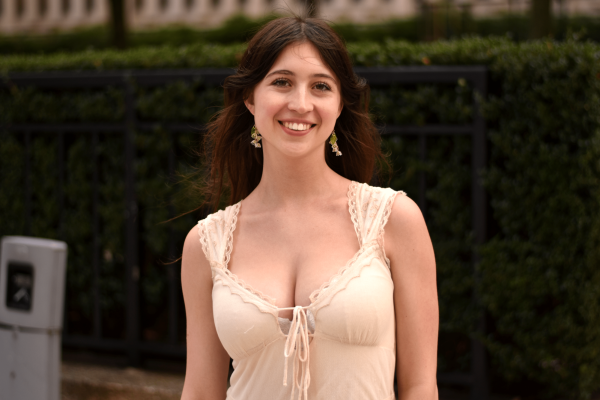
USG hosts elections each year for various positions. During the most recent, Daphne Mei, Fordham College at Lincoln Center (FCLC) ’26, ran unopposed for president and was elected. Due to a lack of other candidates, USG did not hold its usual presidential debate.
Following the election, all 11 seats on the executive board and the majority of senator positions were filled, an uptick from previous years, according to Mei. The election also brought with it the integration of a new executive board position: the head of the Media Relations Committee. The committee existed on an ad hoc basis last spring and was voted in by the USG Senate this fall. Mei said this reflects USG’s broader mission to connect more deeply with the student body and improve both internal and external communications.
USG is working on starting a town hall event next semester — in collaboration with the Residential Hall Association (RHA), Campus Activities Board (CAB) and Commuter Student Services (CSS) — for students to have an even more concentrated forum to vocalize their needs.
To this end, USG has begun posting meeting minutes on Instagram for students who are unable to attend general meetings. They are also now hosting monthly “senator tablings,” during which students have the opportunity to voice their concerns to their class’s senator representative. The first, for first-year students, was held on Oct. 30. The next, for juniors and seniors, will be held on Dec. 4 at 11 a.m. in the Indoor Plaza. Additionally, USG is working on starting a town hall event next semester — in collaboration with the Residential Hall Association (RHA), Campus Activities Board (CAB) and Commuter Student Services (CSS) — for students to have an even more concentrated forum to vocalize their needs.
USG also fields requests from students outside of dedicated meetings. Around two months ago, Mei saw a Fordham student’s Instagram story explaining that, as a wheelchair user, they are unable to see their reflection in the Lowenstein Center’s bathroom mirrors, which are only half-length. So, USG reached out to Fordham’s Facilities, and full-length mirrors were installed in the bathrooms on Nov. 13.
“(The student) didn’t say it in an angry way or an upset way. I think they just said it as, ‘LOL, this is so funny, I can’t use any of these mirrors,’ but I didn’t think it was funny,” Mei said. “I think it’s really upsetting knowing that this person experienced that.”
Mei said she hopes to continue further initiatives to make Fordham more accessible and compliant with the Americans with Disabilities Act.
USG is working on creating a new website in collaboration with the Media Agency Club (MAC).
USG also recently rebranded with a new logo and social media strategy, which coincidentally follows Fordham’s rebranding from this summer and shares a similar emphasis on a fresh, modern look to improve visibility. Their previous logo was only two years old, but according to Mei it had failed to leave an impression on students.
“I feel like a lot of people, like I said, don’t know what USG does or they don’t hear from USG that often. … (Students also) don’t recognize that logo as USG, so we wanted to do something that’s more modern,” Mei said.
USG is working on creating a new website in collaboration with the Media Agency Club (MAC), which they plan to launch in the spring. Mei said an added benefit of working with MAC is that, since the club is relatively new — formed in August 2024 — collaborating with USG helps shine a spotlight on it. The website will consolidate the paperwork necessary for current and aspiring club leaders and display student proposals and proposal templates.
These changes reflect USG’s larger emphasis on efficiency and communication, which Mei said was lacking in prior years.
The website is also a necessary component of Ram Perks, a recent USG initiative focused on increasing student discounts for Fordham students.
“I’ve seen that in previous years, it took forever to get anything done. I feel like it’s a lot of back and forth again with miscommunication (and) just lack of organization,” Mei said.
One specific instance of improvement is the aforementioned proposal template, created by USG’s Vice President Aleasha Wattoo, FCLC ’27. The template gives students a document to refer to if they have a specific initiative they’d like to bring to USG’s attention. USG proposals go through their advisor, the Office of Student Involvement (OSI) and Dean of Students Jenifer Campbell.
“Obviously, that’s a long flow of people that we have to go through. The idea behind (the template) was that we sort of mitigate that process by putting down a lot of the fiscal considerations for any proposals, what it looks like, who would overlook it, the preamble, why it’s necessary,” Wattoo said.
The website is also a necessary component of Ram Perks, a recent USG initiative focused on increasing student discounts for Fordham students. Ram Perks was proposed after the similar Fordham Friendly program went defunct due to the COVID-19 pandemic. USG’s treasurer and chair of the Facilities committee are spearheading the project by coordinating with senators to canvas through Hell’s Kitchen and the Upper West Side.
The members contacted local businesses to see if they would be interested in offering student discounts of 10 to 15%. USG hosted a walkathon for this purpose on Nov. 13 and 15, and is planning a “callathon.” Wattoo said the project is going very well and that their treasurer is looking into expanding it to provide job opportunities with the local businesses.
“We are currently in the process of finalizing a lot of these businesses, but we have a good portion that are really interested,” Wattoo said. “Actually, one of the business owners asked us, ‘Why don’t Fordham students work here? They should apply.’ And so I feel like Ram Perks isn’t just opening doors for obviously more customers for these businesses, but also student discounts and job opportunities with Fordham.”
Mei also noted that, while a wide range of businesses have been contacted, USG is screening all interested participants to ensure the businesses’ values are consistent with Fordham’s.
“We’re going to do background research to see if it aligns with our values,” Mei said. “We’re not just choosing any businesses.”
In addition to collaborating with MAC on the website, USG has prioritized highlighting and working with clubs this semester.
The businesses participating will be featured on USG’s new website, which provides an additional incentive for them to get involved, as it acts as a form of advertisement towards Fordham students.
In addition to collaborating with MAC on the website, USG has prioritized highlighting and working with clubs this semester. USG co-hosted a discussion panel on Oct. 22, offering advice on U.S. immigration policies and career guidance for students interested in immigration law, alongside two student organizations — the Immigration Advocacy Coalition and the Asian Pacific American Coalition. Mei and Wattoo said they are working on bringing back a networking dinner for club leaders, which dissolved after having to be conducted over Zoom during the pandemic.
USG is also coordinating with CSS and Counseling and Psychological Services to bring the Napping Pod to FLC, as there is one already present at Fordham Rose Hill. Due to budgetary constraints, the project is still pending approval. There is continued discussion over how to clean the pods, which would be done by students, and where to place them, as FLC has limited space. Wattoo noted that the pods would particularly benefit commuter students — who make up around 40% of the Fordham student population — by providing more spaces for them to rest between classes.
Finally, USG works with Fordham’s administration in a number of ways. Last month the President’s Student Advisory Group — representatives from Rose Hill and Lincoln Center’s USG, the Graduate School of Social Work, the Graduate School of Arts and Sciences, the Fordham Law School, the School of Professional and Continuing Studies, and the Graduate School of Gabelli at Lincoln Center — met with University President Tania Tetlow. At the most recent meeting, USG raised their concerns about mirrors in the Lowenstein bathrooms. These meetings usually occur each month but, as of this year, they are now once a semester.
USG will meet with the Office of External Affairs on Dec. 8 to discuss creating a Metropolitan Transportation Authority (MTA) college student discount, in light of recent fare hikes.
USG also has four representatives on the FCLC College Council, all of whom have voting power. The council, which meets monthly, is presided over by Dean of Arts and Sciences Jessica Lang and made up of students, faculty and administrators. It oversees the process of adding or removing majors or minors, the ongoing restructuring of the core curriculum and other academic policy decisions. At the most recent meeting, the USG representatives discussed their perspectives on the core language, philosophy and theology requirements. They also expressed student concerns around Fordham not accepting very many advanced placement credits and the strict attendance policy (particularly with respect to mental health days).
Mei and Wattoo said they hope to see even closer collaboration between USG and administration, as the College Council meetings, and those with Tetlow, do not provide enough time to cover everything. They are looking forward to upcoming individual meetings with Lang.
“(Lang) actually did ask our student reps to talk to her individually and set up a meeting with her so she’ll know more about our student experience and not just hearing from the faculty members from the council meeting,” Mei said. “Like I said, those meetings (with administration) are usually an hour or an hour 15, so not enough time.”
This summer, USG worked alongside the Office of Multicultural Affairs (OMA) to establish a First-Generation Committee. The First-Generation Network, an earlier iteration of the same concept, dissolved in 2024. The network was run with the volunteer contributions of students and two deans, who no longer had enough time.
“I really wanted to make sure that this committee is recognized by an official office, which is the Office of Multicultural Affairs, and making sure that we have the funding and that it will never go defunct because we will always have staff members’ help,” Mei said.
The First-Generation Committee plans events and is hoping to establish a first-generation graduation event. The OMA holds graduation ceremonies for each of their specific committees already; One has not yet been added for the First-Generation Committee because it is so new.
USG will meet with the Office of External Affairs on Dec. 8 to discuss creating a Metropolitan Transportation Authority (MTA) college student discount, in light of recent fare hikes. The proposed project would initially focus on only Fordham students.
“(The idea) was inspired by high schools in New York City where apparently all the high schools in New York City kind of work together to pull in some money and then pay the MTA to give discounts to high school students. We want to do something similar with that, but knowing that there are so many universities in New York City … we wanted to start it with just Fordham,” Mei said.
USG will continue to provide updates on the progress of their various projects through their newsletter and via social media.