


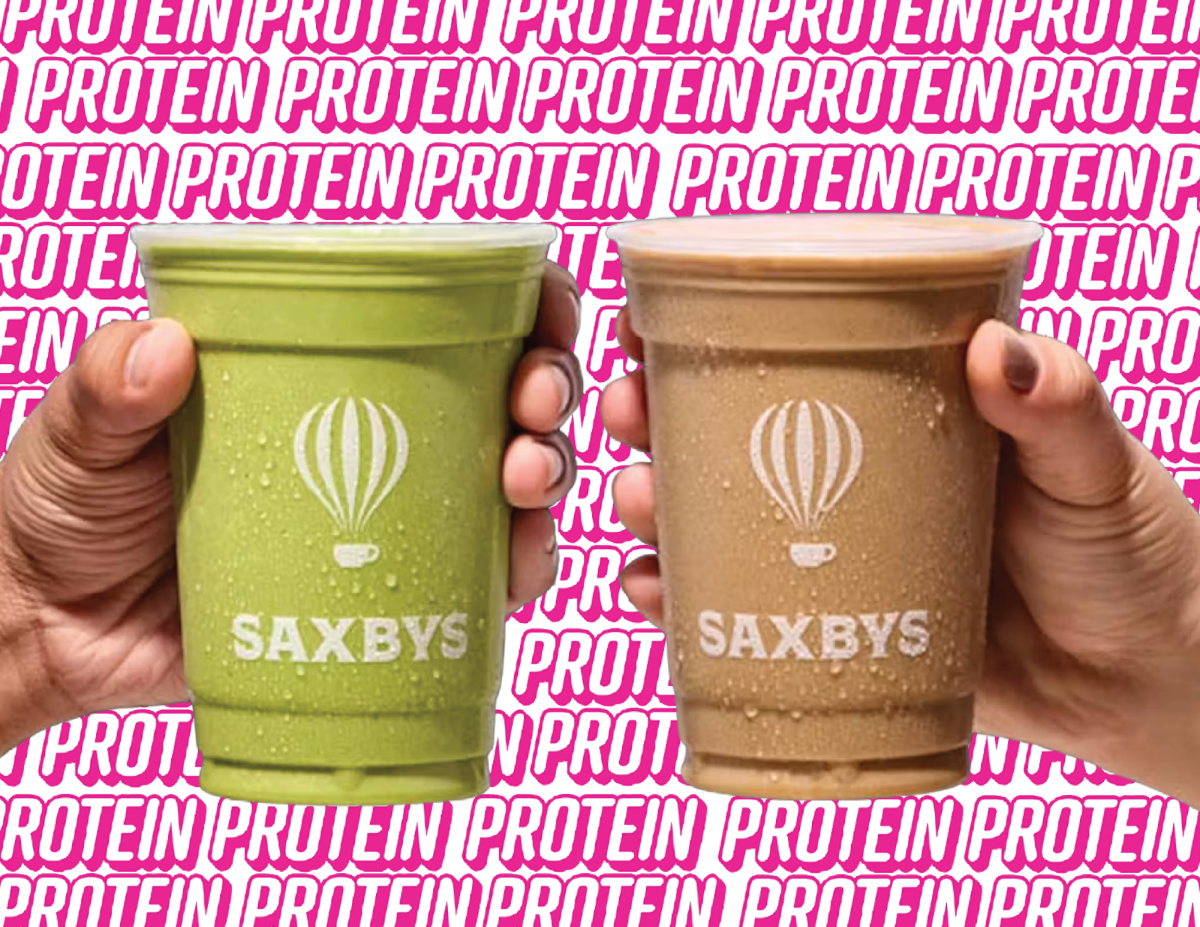
Protein is appearing in more places than ever. Starbucks has introduced protein cold foam, Dunkin’ now offers protein coffee and even Chipotle has promoted a “protein cup” as a customizable add-on of a protein source to a menu item. On campus, Saxbys, Fordham’s student-run cafe, has added the “Fit Frolatte,” a drink containing 22 grams of protein to their menu. Notably, each of these additions have emerged within the past year.
The expansion reflects a broader shift in how food and beverages are marketed, with protein increasingly positioned as a central selling point across menus that once focused primarily on taste or caffeine content, a strategy echoed in Starbucks’ promise of “the flavors you crave and the nutrition you need.”
At Saxbys, student CEO Borna Shayei-Mousavi, Gabelli School of Business at Lincoln Center ’28, said the demand is visible in daily student behavior and ordering patterns.
“I think a lot of people like the Fit Frolatte because it has 22 grams of protein,” Shayei-Mousavi said. “I normally see everyone before the gym coming to get it or after their gym session.”
He added that students are also increasingly customizing other menu items to increase protein content, particularly smoothies.
“We have an option of adding protein to any smoothies, and I’ve seen a lot of people add protein, especially to the Green Goals smoothie,” Shayei-Mousavi said.
“That culture of getting protein in and eating more healthy is boosting businesses to have more protein options.” Borna Shayei-Mousavi, GBLC ’28
Shayei-Mousavi estimated that Saxbys processes roughly 300 to 400 orders per day. Smoothies make up a significant portion of those sales, he said, and about 40% include added protein.
The rise in protein-focused items reflects broader national consumer trends. A 2023 survey from the International Food Information Council (IFIC) found that 71% of Americans are actively trying to increase their protein intake and often associate high-protein foods with overall health and wellness.
“Our data show it is the most sought-after nutrient, the most followed eating pattern and the top characteristic consumers use to define a ‘healthy’ food,” Wendy Reinhardt Kapsak, IFIC president and CEO said in response to the survey.
That perception has helped make protein one of the most widely used marketing tools in the food and beverage industry. Adding protein to a product label can signal health, strength or functionality to consumers, even when other nutritional components remain unchanged. The Harvard T.H. Chan School of Public Health notes that most people consume adequate protein and emphasizes overall dietary patterns over individual nutrients.
On college campuses, the trend is especially visible among students balancing academic responsibilities, social commitments and fitness routines.
Limited kitchen access, time constraints and irregular schedules often shape student food choices. Many rely on prepared foods that clearly display nutritional information, especially protein content, to make quick decisions between classes or workouts.
“A lot of students need a source of protein, and it’s easier to come to a business like us and see that it has 22 grams of protein and get it in five minutes,” Shayei-Mousavi said.
The emphasis on protein is also tied to the growing visibility of fitness culture among young adults. Some students track protein intake as part of exercise routines or general wellness goals, which can increase demand for products that simplify those calculations.
Still, nutrition guidelines suggest that most Americans already consume sufficient protein. According to the National Library of Medicine, the recommended daily allowance for adults is about 0.8 grams of protein per kilogram of body weight. For many people, especially those without specific athletic training goals, daily intake already meets or exceeds that benchmark.
Despite this, protein continues to gain prominence in marketing and product development. Industry analysts say foods labeled as high protein are often perceived as healthier options regardless of overall nutritional composition, making the label itself a powerful sales tool.
Shayei-Mousavi said the trend reflects broader shifts in how students approach food decisions on campus. He also noted that the popularity of protein additions has increased across multiple menu categories, not just signature drinks, suggesting that students are actively seeking ways to modify existing products rather than simply choosing new ones.
“That culture of getting protein in and eating more healthy is boosting businesses to have more protein options,” he said.
As protein becomes more prominent across national chains and campus cafes, it is shaping how products are developed, labeled and consumed.
For students, that means everyday decisions such as coffee, smoothies and snacks are increasingly influenced by protein content, turning a once-simple nutrient into a defining feature of modern food marketing.