


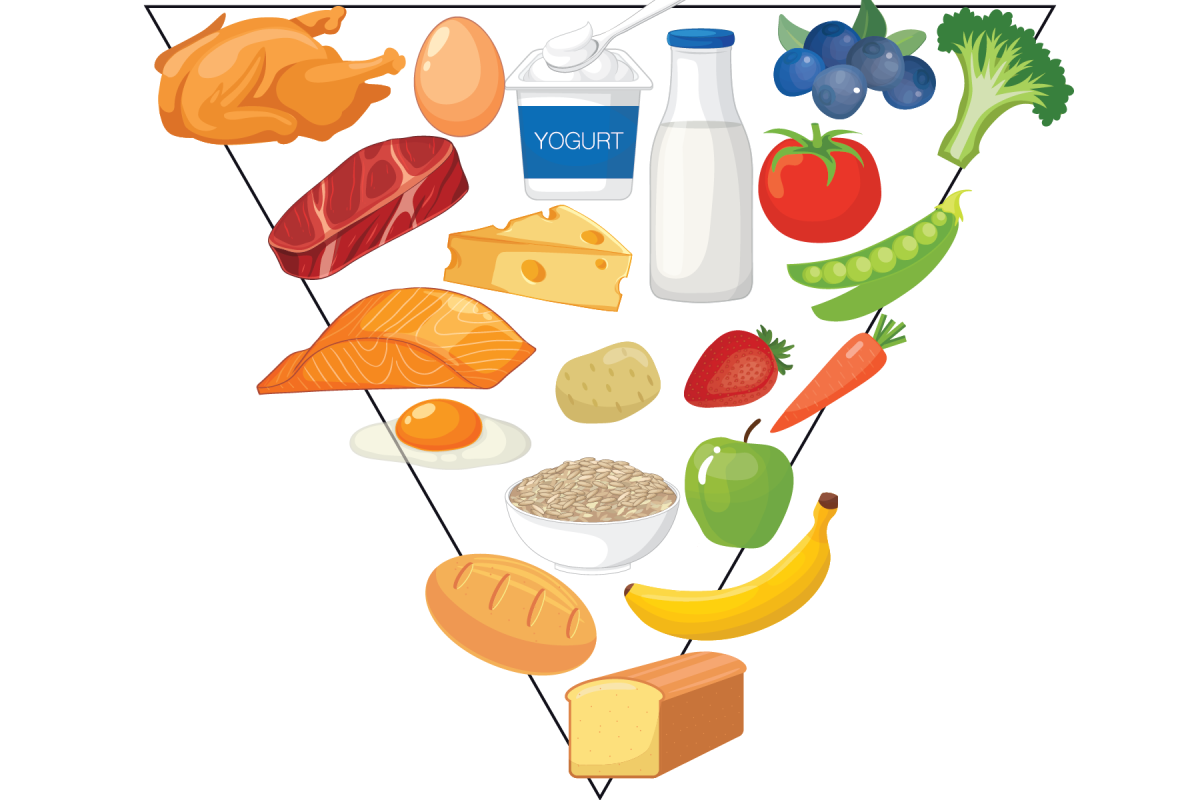
At the start of the new year, the U.S. Department of Health and Human Services (HHS) released the Trump administration’s new dietary guidelines for 2025-30 with the U.S. Department of Agriculture. The new Dietary Guidelines for Americans have sparked much confusion as their advice contradicts the nutritional advice that has been consistent for years.
The new dietary guidelines feature an inverted food pyramid, which is reminiscent of the pyramid that many Americans grew up with. Released by HHS Secretary Robert F. Kennedy Jr., the new pyramid aligns with his position in the “Make America Healthy Again” movement.
The new guidelines, along with Kennedy’s public position of eating “real food,” urge Americans to prioritize whole foods. Whole foods are unprocessed, naturally made foods, including carbohydrates, fats, proteins, vitamins and minerals. Including whole foods in your daily diet is essential to ensure the body receives the macromolecules and supplements needed to support crucial physical functions.
The guidelines offer some useful insights into a healthier lifestyle. This includes the suggested five servings of fruit and vegetable consumption; ingesting unsaturated fats through avocados, seafoods, olive oil and nuts; and limiting highly processed foods, added sugars and refined carbohydrates.
The AHA felt the recommendations ‘could lead some consumers to exceed suggested limits for sodium and saturated fat, which are primary drivers of cardiovascular disease.’
While the previous guidelines for 2020-25 were 160 pages, including recommended meal plans and presented research, these guidelines keep it brief, at just 10 pages of direct advice. Accessible research is provided to back much of their information.
Though keeping it brief on the widely surfaced guidelines, they also released a 418-page research supplement called The Scientific Foundation for the Dietary Guidelines for Americans.
The staples pictured in the main pyramid in the new guidelines are all valuable parts of a nutritious diet; however, the suggested balance for consuming these foods is being questioned. Prominent health organizations such as the American Heart Association (AHA), Stanford Medicine and Harvard Public Health have responded to the new guidelines, demonstrating concern for the ratio and emphasis on specific foods that contrast several decades of consistent nutritional advice for Americans.
There is a greater emphasis on saturated fats than in previous government guides. The inverted pyramid highlights a carton of milk, red meats, cheese and butter. The AHA recommends no more than 120 calories from saturated fats per day, making up only around 6% of the 2000 calories in the average daily diet.
The guideline suggests that saturated fat intake should not exceed 10%, with an emphasis on red meat. There is also a suggestion to cook in butter and beef tallow. Given these new suggestions, the saturated fat content in one’s diet is at risk to pass suggested levels.
AHA responded to the new dietary guidelines concerned with the recommended intake of red meat, sodium and whole-fat products due to their negative effects on cardiac health.
The AHA felt the recommendations “could lead some consumers to exceed suggested limits for sodium and saturated fat, which are primary drivers of cardiovascular disease.”
Additionally, the guideline raises some concerns for vegans or vegetarians who choose not to consume meat or animal products, as there is a prioritization of animal-based protein, particularly over plant-based protein. This emphasis raises concern for susceptibility to cardiovascular disease.
The guidelines directly state that vegetarians and vegans “fall short” on many vitamins and need to pay attention to the “nutrient gaps” in their diet. The Physicians Committee for Responsible Medicine also responded to the fallacy of this nutrition gap, describing how one can build a wholly fueled and nutritious diet from grains, beans, vegetables and fruit, as well as a typical vitamin B12 supplement.
As some shifts in the new 2025-30 U.S. Dietary Guidelines have sparked disagreement among government officials and prominent health organizations, it is crucial to rely on evidence-based research and personal recommendations from health providers regarding nutritional plans.
