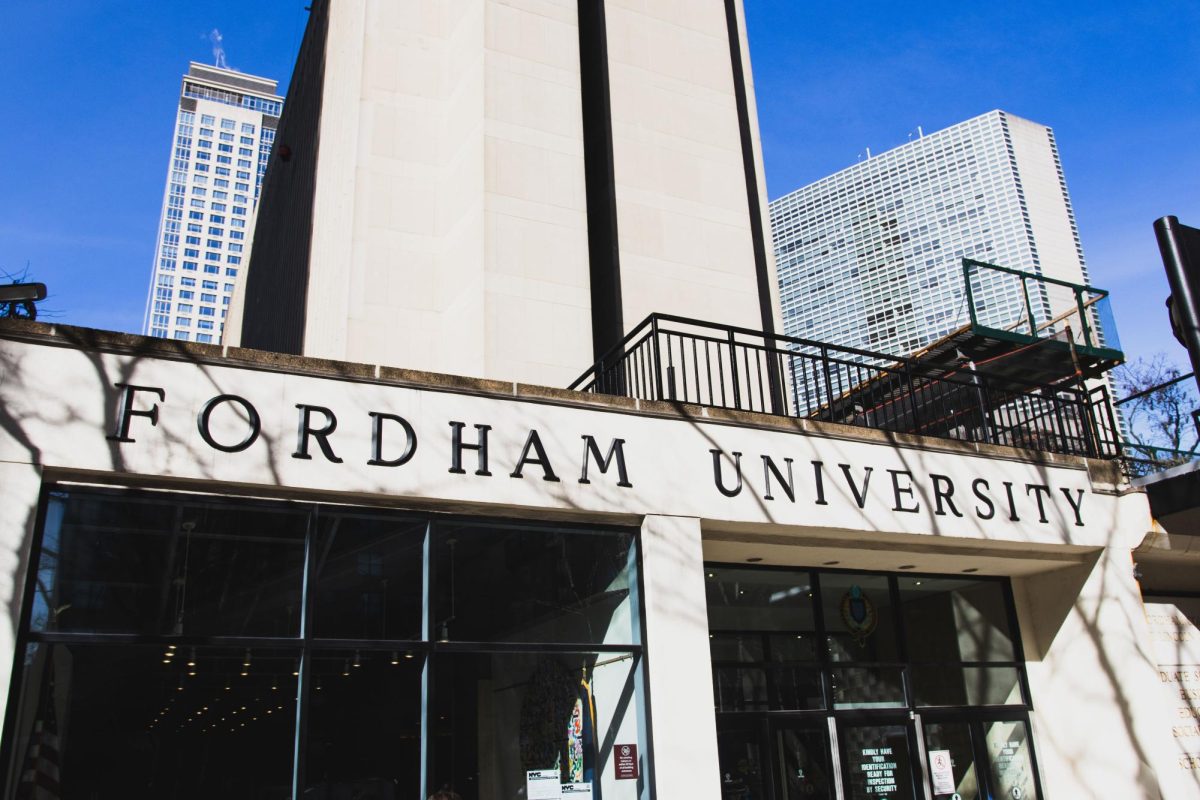
Fordham University announced a 4.5% tuition increase and a 3.0% increase to meal plan and average room fees for the 2026-27 academic year in a university-wide email from Chief Financial Officer Tokumbo Shobowale on April 9.
The university raised tuition by around 4% every spring semester since 2022, most recently increasing by 4.65% last academic year.
During the COVID-19 pandemic, the university opted not to raise tuition for the 2021-22 academic year given the financial stress many families were already experiencing, a decision ratified by the Board of Trustees. Tuition increases were already a trend prior to 2021, with costs rising by 3.3% for the 2019-20 and 2020-21 academic years.
Now, yearly sticker price tuition will cost $67,925. For comparison, in 2010, the total cost of tuition and fees was $37,782, so around an 80% increase in the last 15 years.
Tetlow also spoke to the additional costs incurred simply based on Fordham’s location in New York City, while Fordham students do not “pay hugely higher tuition to go to school in New York.”
In the email, Shobowale cited inflation pushing operational costs up as the primary reason for the increase. Some students have expressed frustration that the tuition increase exceeds this year’s inflation rate of 3.3%.
Shobowale added that “Fordham will increase financial aid for those with the biggest need.” He said that the increase is already reflected in the incoming class of 2030’s financial aid packages.
In a student press conference on April 7, University President Tania Tetlow announced the tuition increase to The Observer and The Ram. She, too, pointed to inflation as a driving force behind the increase and reaffirmed that financial aid is the number one priority in Fordham’s budget.
“The inflation that hits you and your families also hits Fordham,” Tetlow said. “It is our moral obligation to be as efficient and frugal as possible, so that every penny that you spend in tuition is spent in a way that is valuable to your education.”
Shobowale referenced recent budgetary measures taken by the university — including cutting “discretionary spending” by 10% and instituting a hiring restriction — as administrative efforts to improve efficiency and mitigate costs prior to making the decision to raise tuition.
Tetlow also spoke to the additional costs incurred simply based on Fordham’s location in New York City, while Fordham students do not “pay hugely higher tuition to go to school in New York.”
It wasn’t unexpected to me that there was a tuition hike this year and that was a big, big reason as to why I (am transferring) because I can only imagine the school is going to continue to get more expensive and I can’t see this school being affordable to me in the next (two) years. Juan Hernández-Cabrera, FCLC ’28
Tetlow added that the university’s focus on disbursing financial aid will be on ensuring returning students are not forced to leave the university if the increase pushes past what their families can afford.
The realities for students may not necessarily reflect these sentiments, though. At the beginning of last semester, The Observer reported that several students transferred out of Fordham due to the previous tuition hike after their appeals for additional financial aid failed to result in substantive enough increases.
Juan Hernández-Cabrera, Fordham College at Lincoln Center (FCLC) ’28, is transferring out of Fordham this semester for financial reasons. After the increase to tuition and room and board for the 2025-26 academic year, Hernández-Cabrera began to reevaluate his future at the university.
Over the summer, he applied for more financial aid, receiving an increase and securing additional funding through other scholarships. However, he said he expects that tuition will only continue to go up, becoming increasingly unaffordable.
“It wasn’t unexpected to me that there was a tuition hike this year and that was a big, big reason as to why I (am transferring) because I can only imagine the school is going to continue to get more expensive and I can’t see this school being affordable to me in the next (two) years,” Hernández-Cabrera said.
Chen said he wishes the university would allow students to participate in conversations about tuition increases, especially considering they are a consistent phenomenon.
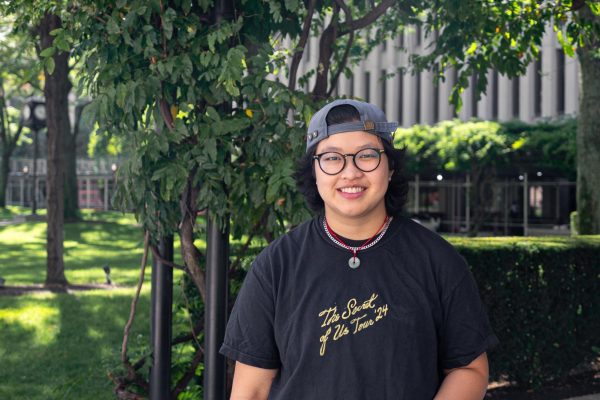
Jacob Chen, FCLC ’27, shared similar concerns about future increases. He stressed that the tuition hike will have a disproportionate impact on first-years and sophomores — as they have more years of school and likely more tuition increases ahead of them — and on-campus residents whose housing costs are going up.
Both Chen and Hernandez spoke to what they view as a lack of transparency regarding the university’s finances and the necessity of the repeated hikes. Chen said he wishes the university would allow students to participate in conversations about tuition increases, especially considering they are a consistent phenomenon.
“(The tuition hike) is kind of ridiculous since they also increased the tuition last year as well, and I think now Fordham is comparable or even more expensive than other New York City schools like NYU (New York University) while not offering as many opportunities as other schools,” Chen said.
NYU’s tuition for the 2025-26 academic year was $65,622 — about the same as Fordham’s.
Chen added that he feels the university’s repeated increases of tuition are misleading with respect to what students originally planned to pay, as he, like some other students, chose to attend Fordham largely due to the financial aid package he was awarded.
Chen plans to submit a financial aid appeal over summer, though he said the appeal process is needlessly complicated and (in his experience) rarely results in substantive increases.
Of course, not all students will be equally affected. Maykon Reyes, FCLC ’29, shared that, as a veteran, his tuition is covered by the Government Issue (G.I.) Bill so the tuition hike will have no impact on him.
Nonetheless, the news was met with widespread frustration among students, some of whom will have to reconsider their economic plans for the coming year.