If you’re a college student in your twenties, you’ve likely been inundated with talk about situationships. Whether it’s on social media or in real life, people who have been in a situationship never seem to regard the experience as positive. Luckily for those who have had a situationship or have to hear about one, psychologist Susan Albers has lent a hand in defining what they are: “Situationships are characterized by a lack of obligation or exclusivity, but the real hallmark is a lack of clear boundaries or labels.”
I’d hate to fault all of those who have found themselves in situationships as of late — they probably need some tender love and care instead — but why does it feel like the pointless existence of situationships is a recent phenomenon? The sexual revolution may be partly to blame.
Like “hangry,” a combination of “hungry” and “angry,” the literal term “situationship” is a portmanteau. This fabricated word skyrocketed in popularity in January of 2023. However, I believe the concept dates back to the start of the sexual revolution when social rules about dating were forgone and new ones emerged.
Young adults no longer sought out lifelong partners in places like college because sexual exploration was at the forefront, and in the background lingered war — a future for young people almost seemed impossible. When commitment wasn’t prioritized, especially among young adults in cities, the ways people approached dating changed. As historian Beth Bailey described, “no completely dominant national system of courtship has emerged” since the 1970s. Compare this to prudent years like 1939, when 47% of women were married before their 19th birthday.
The demarcated line between the joy of sexual freedom in the 1970s and today is that it’s not refreshing or new anymore.
This is why I believe that the dating practices of past decades share less in common with those of the 1970s than those of today. The 1970s were marked by political and economic instability — it was a turning point for the United States, so it’s not surprising that when it came to intimate relationships, a ring on the finger didn’t bear much weight anymore.
A great way to gauge the opinions of 1970s youth on their newfound sexual prowess is by analyzing the media published at the time. Take the New York publication “Singles News” as an example. First published in 1975 by Marilyn J. Appleberg, young adults were given the opportunity to advertise themselves to potential partners. In the 1976 issue, Kally, a 25-year-old hair stylist, stated that she wanted to meet someone who “loves being a single New Yorker as much as she does.”
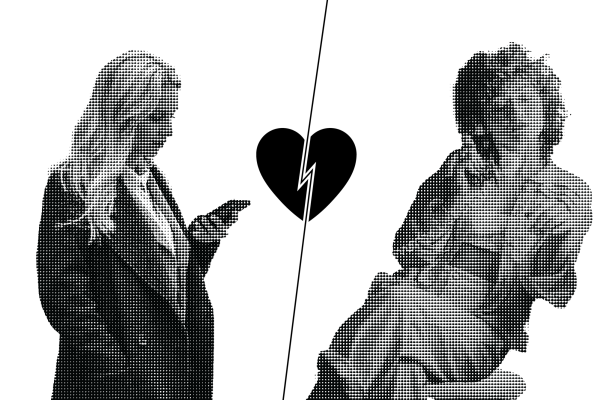
People like Kally found liberation during the sexual revolution by being single and being proud of it. The demarcated line between the joy of sexual freedom in the 1970s and today is that it’s not refreshing or new anymore. Young adults living in cities seem to be at a breaking point with their experiences in situationships; in densely populated areas, it’s not surprising that people are able to date around. Rather than be the talk of a town, living in cities like San Francisco and New York City allows people to move among the crowds without ever getting wrapped up in a singular experience or relationship. For both gay rights activists and feminists, the sexual revolution’s overarching sentiment was for people to use their sexuality and gender as vehicles for empowerment.
The online and print publication ““On The Rag”” may be the best textual evidence future historians will have of Generation Z’s dating culture. Ranging from a few sentences to pages of text, writers can submit their stories on any topic. Some submissions are dating ads such as the brief post titled “Seeking autofiction-loving gf.” Others detail unrequited loves like the submission titled “He only likes me when it’s subtext,” where the writer described his tumultuous relationship with a friend he went on some dates with, and was then rejected by, only to continuously pine for after said boy got into a relationship. The writer ended his piece stating, “I go between liking this dynamic and thinking it’s all very humiliating. I don’t even know what I want from him, he’s not boyfriend material.”
Other submissions are written directly for situationships, like “using this site to reach my blocked situationship,” where the writer revealed, “I think a part of me is always missing you even when you’re in my life” and “sometimes it feels like you only love me when I’m not available to you.” Whether a situationship occurs due to external things, like a boyfriend or one’s own self-doubt, what unites the people in our generation is that they’re all going through the same thing, just different versions of it.
According to a 2024 YouGov report, over 50% of U.S. adults between the ages of 18 and 34 have admitted to being in a situationship.
So, while the sexual revolution served a purpose, situationships, on the other hand, do not. They serve no benefit, nor do they empower people. I’m not a psychologist like Albers, but from some inferring, the crux of many situationships seems to be a lack of communication between people. I honestly believe situationships have done more harm than good, and not only in regard to Gen Z, but also to millennials.
According to a 2024 YouGov report, over 50% of U.S. adults between the ages of 18 and 34 have admitted to being in a situationship. The fact that millennials are experiencing this epidemic of situationships may be even more shocking than the actual statistic, because for the past 20 years, people in their 30s have served as the maximum threshold for marriage, but slowly, the average age for marriage for women and men has been creeping up on Americans. Last year, the U.S. Census revealed that the estimated age for men to have their first marriage was about 30 years old, and for women, it was 28 years old. As long as young adults keep pushing off marriage, the standard for relationships will follow suit.
Cultural touchpoints like “On The Rag” publicly display how situationships can be harmful. Even on social media, TikTok videos and Instagram posts discuss in detail personal experiences being in a situationship, sometimes while it’s ongoing. The accessibility of the internet allows for the opinions and moods of different people to be published and immediately viewed by others. This, in turn, creates an influx of words online that people take and use to describe their own experiences. What I’m trying to say is that we are all operating on a collective hive mentality. Situationships, both the term and dynamic, have been used to make sense of emotional undertakings that are sometimes so difficult and life-changing that a label may just lessen their blow. For young adults who grew up on the internet, a label like “situationship” is a call sign to share our unique emotional grievances with one another.
In a perfect world, the dating scene in 2026 would resemble that of the 1970s, but that would mean situationships would never have become the baseline for the way we experience loving another person — it would be much more personal. Think about Kally’s advertisement; she was upfront about her adoration for being single and wanted a partner, or lover, to have the same appreciation for it. When people enter relationships of any kind, it’s important that communication is not only heard, but also clear.
I’m not advocating that our generation restore 1950s dating culture, even though bringing back heavy petting could be fun. However, I think that as a collective, we need to stop being in situationships. This means when a friend tells you about an ongoing situationship that’s causing them anxiety and stress, be up-front and tell them to end things with that person. But then again, I am not a psychologist, and you probably aren’t either.
Regardless, it’s good to understand that the peaks experienced in a situationship will never outweigh the lows. Additionally, perhaps we can all stop posting about our situationships. I don’t think an Instagram create mode post will heal anything. Instead, funnel those emotions into creating something that serves a greater purpose, or do what I do and let them quietly eat you alive!