
CivicReset, a student-led nonprofit that advocates for housing and zoning code reform, was started almost a year ago by two Fordham sophomores facing a problem shared by countless New Yorkers: the city’s staggeringly high rent prices.
Indeed, a number of sources place New York City’s current median rent at around $4,700, over 150% higher than the national average. In order not to classify as rent-burdened, a household should spend under 30% of their income on rent. In New York City, a household would need to earn about $190,000 or more to meet these requirements, around twice the median household income of $81,228 in 2024, indicating a growing disparity that leaves the vast majority of households rent-burdened.
Farid Sofiyev and Angelo Mazza, CivicReset’s co-founders, are both finance majors in the Gabelli School of Business at Fordham. They began brainstorming what would become CivicReset after struggling to find an apartment off-campus in the spring of last year. Mazza, an Astoria native, had seen this issue affect many families in his home neighborhood.
During his apartment search, Sofiyev consulted his friend, a real estate broker, who told him a large part of the issue is the city’s zoning codes. Across the five boroughs, New York City’s lowest-density districts make up around 45% of the land, while only housing 28% of the city’s population. CivicReset’s solution? Mixed-use development.
Mixed-use development combines commercial and residential spaces in the same building or development area, usually taking the form of a restaurant or business at the bottom of an apartment building.

The two looked to Long Island City as an example of the downsides of low- and high-density housing. The area, which used to have mostly industrial factories and single-family homes, has, in the last two decades, seen a dramatic change in zoning codes leading to an increase in high-density, luxury housing.
“That might seem like a positive, because we’re advocating for more housing units, but the issue is that there’s not enough economic incentives for the developers to make them affordable. So to maximize their profits … they’re not even good quality buildings, but the second part is that they’re luxury units, virtually all of them, and that actually displaces and drives out more New Yorkers than it does bring them in,” Sofiyev said. “It really feels a little dystopian when you walk around and it’s just all these ultra-high-density luxury towers and no people walking around.”
There are some economic incentives for developers to build affordable housing. In 2024, the city implemented the Affordable Neighborhoods for New Yorkers and Affordable Housing From Commercial Conversions programs. These provide tax benefits to developers that include affordable housing units in their buildings, and that include such units in properties converting from commercial to residential use, respectively.
New York City Housing Connect is a city-wide affordable housing program providing units via a lottery system, which developers are encouraged to join through initiatives like the above.
Sofiyev and Mazza believe that mixed-use housing mitigates the problems with low- and high-density housing, promoting community by making neighborhoods more walkable and increasing the number of units available in lower density areas.
“If you look at Sunnyside, Queens, there’s a lot of buildings that are four to seven stories and then they have stores in the bottom unit. That reduces car inflow and car traffic because people are more likely to just walk downstairs and walk to grocery stores and restaurants. It also helps to build a sense of community, and it’s just a lot more sustainable of a development model,” Sofiyev said.
“Just seeing the interest in younger people made me realize that it’s actually a cause worth pursuing.” Angelo Mazza, co-founder of CivicReset
Sofiyev also said that CivicReset is not anti-landlord, but “anti-huge corporate development that completely ruins everything around it and just price gouges to extreme extents.”
CivicReset’s primary goals are to bring zoning codes into the affordable housing conversation, break them down into comprehensible terms and raise awareness about housing crises in New York City and beyond. It does so primarily through Substack articles and podcast episodes.
The co-founders hope to start hosting events this spring. Their ultimate goal would be to have multiple chapters of the organization in cities across the country and internationally, each run by a student leader who spearheads a small team. This way, each chapter could concentrate on advocating for specific zoning code reform in a given community. At present, CivicReset’s focus is broad, advocating for New York City as a whole, rather than one specific borough or neighborhood.
Since its inception last March, the non-profit has expanded to recruit three interns and partner with several more senior organizations with similar missions. The interns’ responsibilities are flexible, helping research, write articles and create social media content. Their backgrounds range from George Washington University to Rutgers University and the London School of Economics, extending CivicReset’s reach past Fordham and even New York City.
Sofiyev and Mazza said they were shocked to see the high volume of applications they received from qualified and passionate individuals.
“With interns, we’ve gotten a lot of applicants and honestly, that’s been the most validating part of it because it shows people are interested, students even,” Mazza said. “It’s an unpaid internship … just seeing the interest in younger people made me realize that it’s actually a cause worth pursuing.”
Looking back, both Mazza and Sofiyev said the biggest challenge they have faced so far was in the development phase: simply figuring out where to begin and how to narrow the organization’s mission, as they are keenly aware that “solving” New York City’s housing crisis is a mammoth task. Reforming zoning code, for instance, must be done block by block; thus, it would be impossible for the two of them alone to tackle all of New York City.
After asking around about what people care about regarding affordable housing in Astoria and on Reddit, the two found that there were no similar student-led initiatives, and that most existing organizations presented zoning code information in incredibly technical, inaccessible language. They then set out to inform people in more comprehensible terms and developed their overall approach, which focuses on supporting affordable housing in various ways.
“Our approach focuses on three key areas: advocating for zoning reform that enables higher-density housing near transit hubs, promoting mixed-use development that creates vibrant neighborhoods and pushing for inclusionary policies that ensure affordable housing remains accessible to all income levels,” CivicReset’s mission statement said.
Mazza and Sofiyev’s two primary goals for the coming year are scaling and partnerships. The two shouldered the start-up costs of the organization out of pocket and, shortly after, received donations by knocking on doors in Mazza’s neighborhood. This grassroots organizing remains central to the ethos of the organization.
The two did not initially apply for 501(c)(3) status, which provides non-profits with federal tax exemptions and the ability to apply for grants. 501(c)(3) status comes with certain regulations regarding how qualifying organizations can conduct political activity and lobbying. At first, Sofiyev and Mazza were concerned this would limit their freedom of expression, but Sofiyev said they would likely need to apply in the future as the organization grows.
Last week, CivicReset secured partnerships with three new organizations: StriveHigher Inc, a Bronx-based nonprofit focused on educational support; Press Pass NYC, an organization dedicated to supporting student journalism; and Building Culture. Mazza and Sofiyev remarked that they are both particularly excited for their partnership with Building Culture. Building Culture is an architectural design firm currently building a completely walkable city in Oklahoma, with over 30 local businesses already agreeing to participate in the development. While not having perfectly identical missions, Sofiyev said the two organization’s values of sustainable, human-centered development align. CivicReset will publish articles to their Substack spotlighting their partners, while the connection to more senior, established organizations boosts their credibility. They also plan to co-host events in the future.
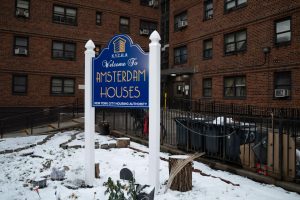
CivicReset also works with Fordham’s Campus Ministry and the Pedro Arrupe Volunteers (PAV), a group of students dedicated to direct service engagement. Campus Ministry has helped recruit volunteers and connect CivicReset with members of the Fordham community. The two co-hosted an event with PAV reading to children at the Amsterdam Houses, a public housing project on the Upper West Side, in November of last year.
As CivicReset approaches its one-year anniversary, Sofiyev and Massa both look forward to continuing to further the organization’s work in 2026.