
In response to the Supplemental Nutrition Assistance Program’s (SNAP) federal funding being halted for almost two weeks, Fordham’s Campus Ministry built upon its annual Thanksgiving food drive to create an on-campus food pantry with the Resident Hall Association (RHA) for members of the Fordham community.
Low-income populations across the nation have been wrought with food insecurity amid rising inflation. On the Lincoln Center campus, Campus Ministry and RHA are working together to increase the amount of food assistance they can provide to the Fordham community by opening new on-campus food pantries, on top of Campus Ministry’s annual food drive.
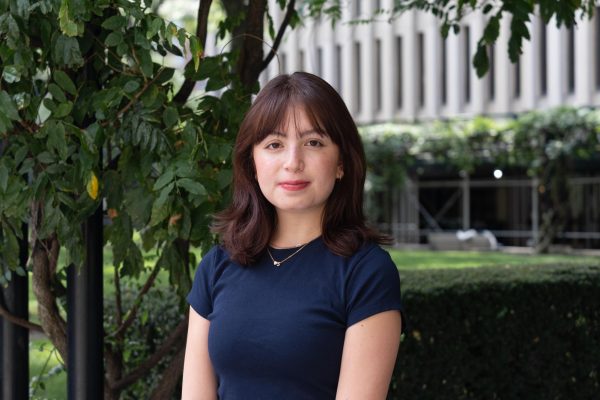
RHA secretary Chara Blagrove, Fordham College at Lincoln Center ’28, reflected on the simultaneously stressful and fruitful timing of the SNAP cuts and the Thanksgiving season, allowing them to place “more emphasis on giving.”
“(It’s) just really heartwarming to see, that when these systems and structures that we rely on in our government fail, our community is very quick to say we want to support one another and we care about one another.” Erin Hoffman, Director of Campus Ministry for Lincoln Center
“Especially with college students, we have sometimes so much extra food and there’s always someone that you could give it to,” Blagrove said. “The cans of soup that your mom gave you and that you’re not going to eat, someone will eat it and someone will love it. So just give what you can.”
Erin Hoffman, director of Campus Ministry for Lincoln Center, expressed the especially difficult circumstances many local food pantries are facing as the SNAP emergency compounds the “big strain” they are already under during the holiday season.
Hoffman’s work at the Lincoln Center food pantry reminded her of “how fragile all of our collective situations could be and how interdependent we ultimately are.”
“(It’s) just really heartwarming to see, that when these systems and structures that we rely on in our government fail, our community is very quick to say we want to support one another and we care about one another,” Hoffman said.
The food drive collects monetary donations and distributes them across the university’s partnered food pantries and nonprofit organizations.
Campus Ministry at all of Fordham’s campuses holds its annual food drive in partnership with local nonprofit organizations in the Bronx, Manhattan and Westchester.
The food drive collects monetary donations and distributes them across the university’s partnered food pantries and nonprofit organizations. Hoffman explained the impact that Fordham can have through its partners, which “are set up more sustainably to be able to provide (aid) services.”
“It’s a university initiative that Campus Ministry spearheads as a way to really support and invest in these relationships that we have with community partners,” Hoffman said. “(It’s) part of being a neighbor in our community.”
One of the organizations that Fordham Lincoln Center joins forces with for the Thanksgiving food drive is St. Paul the Apostle’s Loaves & Fishes Food Pantry. The pantry operates in the church just a block away from Fordham’s Lincoln Center campus and is piloted by the St. Vincent de Paul Society Conference, a global Catholic community of volunteers. The organization collects donations for its various services, which include providing bags of groceries to families and paying medical bills.
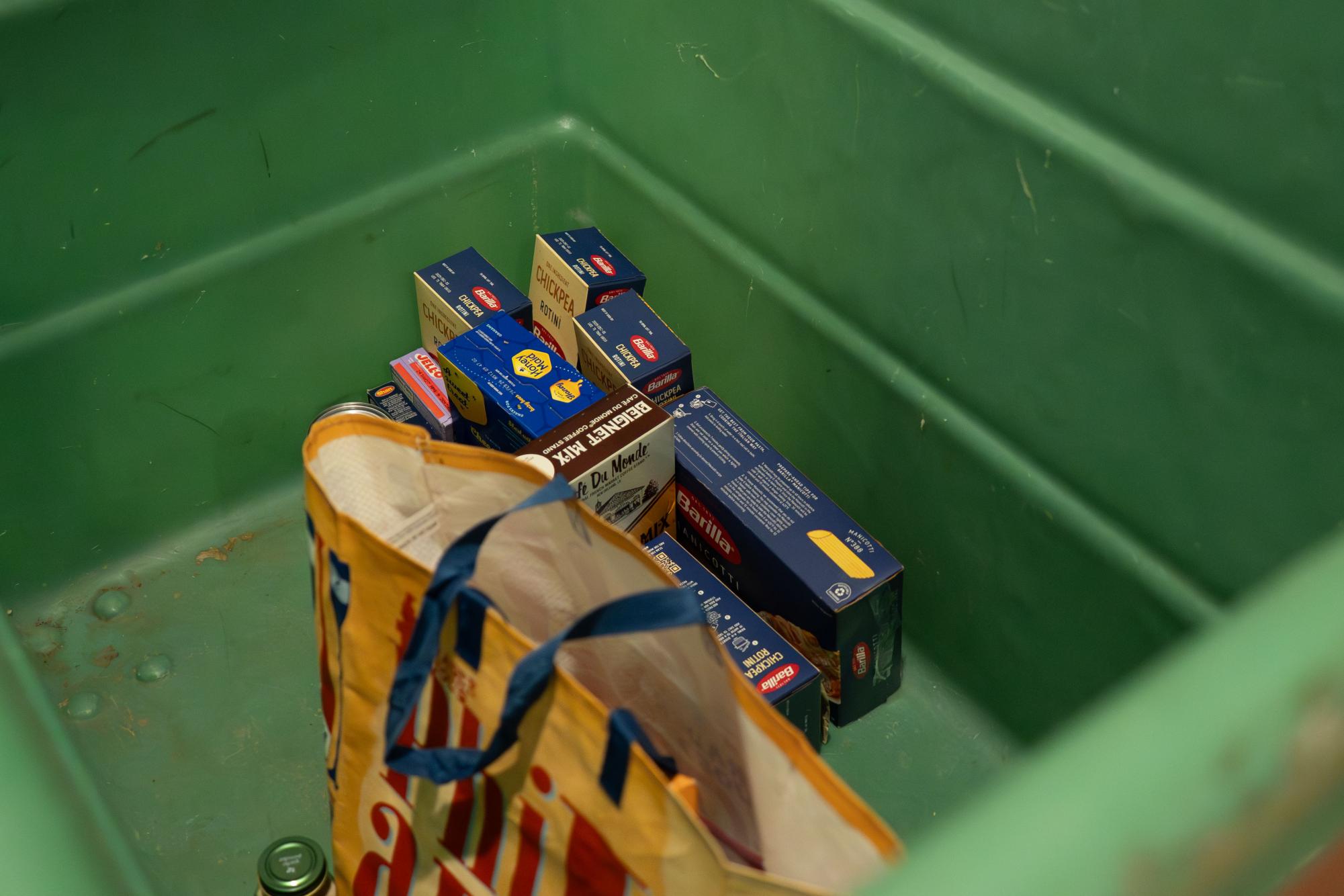
Bonnie Kahn, a volunteer member of the St. Vincent de Paul Society Conference, described the strain caused by the SNAP funding cuts. While claiming that the pantry has not yet been affected, she recalled that there were double the number of people at their pantry this weekend than the previous month.
“We had over 400 people, which we have never seen before,” Kahn said.
The increase in need was not only felt by St. Paul the Apostle’s pantry. According to Kahn, pantries around the area have also recently faced a spike in demand, causing some to “already run out of food” before the typical Thanksgiving rush.
Kahn expressed her gratitude for the church’s community, feeling “very blessed” that “parishioners support (them) and they keep donating.”
Kahn also encouraged participation from students beyond monetary donations, emphasizing the need for volunteers at the pantry. The church opens its doors to allow access to the pantry for those in need every third Saturday of the month.
On July 4, President Donald Trump signed the One Big Beautiful Bill Act of 2025 (OBBB) into law. The bill restricted funding to Medicaid, eliminated graduate student loans, increased the national defense budget by $1 billion, changed the eligibility standards for SNAP and ended the government’s allocation of funds to the SNAP Nutrition Education and Obesity Prevention Grant Program.
The OBBB changed the work requirements for able-bodied adults without dependents (ABAWD) to receive SNAP benefits. An ABAWD is now defined as a person “aged 18-64,” “not living with a child under 14,” and “able to work,” according to the New York State Office of Temporary and Disability Assistance. The age of an ABAWD under this bill was increased to 64 years from 54. Exceptions to the work requirements were removed for veterans, homeless individuals and those 24 or younger who aged out of foster care.
At the end of October, a lower court judge in Rhode Island ordered the Trump administration to fully finance SNAP benefits for the month of November. The administration then turned to an appeals court, which refused their case, before bringing it to the Supreme Court.
The October court order allowed New York state to begin issuing full SNAP benefits to eligible households under the new requirements. On the New York state official website, officials described ongoing efforts to distribute aid despite the administration’s pushback. They estimated that benefits would be fully distributed by Nov. 15, but Supreme Court Justice Ketanji Brown Jackson temporarily blocked the previous court order, calling for the appeals court to reevaluate the case.
“I do think that (the SNAP emergency) has helped to amplify the fact that this isn’t a one-time challenge for people, and that in the economy (and) the political climate that we have right now, it’s not likely to get better before long.” Erin Hoffman, Director of Campus Ministry for Lincoln Center
The New York state website has since edited its SNAP page to explain the eligibility requirements residents must now meet in order to receive aid.
On Nov. 12, the United States government reopened after a 43-day shutdown, the longest in the country’s history. On Thursday, the Department of Agriculture directed state governments to ensure their constituents receive full SNAP benefits, claiming that most should expect to receive them by Nov. 17.
Hoffman pointed out that hunger crises in the United States “will continue to persist longer than just turning lights back on in the government.”
“I do think that (the SNAP emergency) has helped to amplify the fact that this isn’t a one-time challenge for people, and that in the economy (and) the political climate that we have right now, it’s not likely to get better before long,” Hoffman said. “We know that you have to meet your basic needs in order to meet those higher-level needs.”
“There’s a more tangible result that can be seen that doesn’t feel like such a small drop in the bucket. There’s always going to be a need and opportunities to do that.” Erin Hoffman, Director of Campus Ministry for Lincoln Center
Furthermore, Congress approved the end of the government shutdown without reaching an agreement on the extension of enhanced health care subsidies under the Affordable Care Act. The credits help millions of Americans afford their health care premiums, without which their premiums would double.
The political affordability battles over health care and food, among other policies enforced in the United States recently, have been felt in the Fordham community. Hoffman observed that the “overwhelming” climate has driven students to “want to shut down and tune it out because there’s just so much that people don’t know where to start.”
“I think just having these opportunities here in our community to do something has also been a service to this community in the process,” Hoffman said. “There’s a more tangible result that can be seen that doesn’t feel like such a small drop in the bucket. There’s always going to be a need and opportunities to do that.”
On Nov. 17, Campus Ministry sent an email thanking those who donated for their contributions to the emergency food pantries, which have allowed them to provide aid to over 300 Fordham community members since they opened on Nov. 3.
In the email, they acknowledged the year-round stress of food insecurity beyond the SNAP emergency and described ongoing efforts to “explore potential long-term resources to ensure sustained support.”
The Fordham Lincoln Center food pantry will operate Monday through Friday from 11 a.m. to 4 p.m. until Tuesday, Nov. 25 at 12 p.m. in room 140A of the 140 West 62nd Street Building.