


Rebellion is something that many try to emulate. So many aspects of our culture pose themselves as countercultural. There are the plastic spikes on the “alternative” pieces from fast fashion brands. There are conservatives embracing open prejudice in the face of a culture that, for at least a couple of years, attempted to move away from unabashed hatred.
But what actually makes these things countercultural? Well, I would posit, nothing does. To be countercultural is to rebel against the dominant culture. Instead, these things only reinforce the status quo, which is the opposite of any real rebellion.
For one, purchasing clothing from a fast fashion brand only greases the wheels of the already-capitalist machine that rules our world. The central problem of capitalism is not, of course, the preyed-upon consumer who gives in and gets a studded jacket from Shein. But still, purchasing “alternative” wear from Temu isn’t a countercultural act, regardless of how the clothes are branded.
For a more dangerous example, how is the new wave of shameless prejudice countercultural? Today’s conservatives certainly like to pretend it is. But there is clearly no rebellion in regression. Trying to reinforce restrictive conventions and traditions, especially ones that never actually went away, isn’t counter to anything.
No matter where, there truly are punks everywhere, standing as uncompromising examples of all the loud resistance that music can contain.
Even further, “political incorrectness” isn’t an act against a suppressive movement hostile towards free speech. It’s simpler and far less gallant. Politically incorrect speech is just the ornery sigh of those who refuse to change the prejudiced language they’re used to.
So where can one look for an example of genuine counterculture? The answer is punk rock.
In the face of pseudo-rebellious posturing, we can’t take the seed of defiant energy inside us and waste it on alternative Shein hauls. And more significantly, we can’t let this flashy new wave of Donald Trump-era conservatives claim their prejudice and repressive traditionalism as somehow new, much less something that will upend the dominant culture.
Keeping in mind a movement like punk — one that actually sought to fight against cultural norms, tradition and the powers that be — will allow us to quickly point out false counterculture when it’s in front of us.
Punk rock was born in New York City in the 1970s, coming to life through the Ramones, then booming with the popularity of English band the Sex Pistols. Instead of solely being a sonic phenomenon, those influenced by the biting and spirited style of these bands quickly channeled this new sound into a medium for political speech; a divergence from the Ramones singing about how they “wanna be sedated,” though not too far off from the initial drummings of “God save the Queen … the fascist regime” from the Sex Pistols.
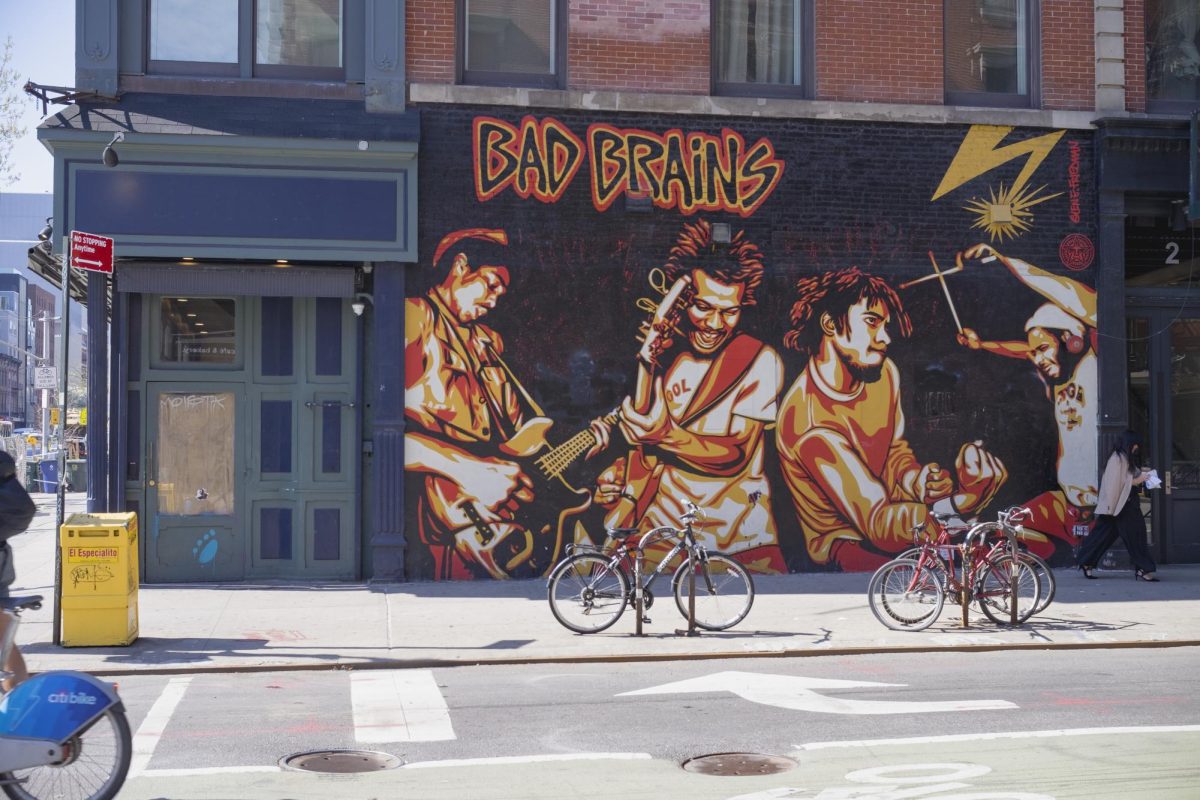
As the 1980s began, countless punk scenes developed in the U.S. and U.K., punk’s dual birthplaces, but also all over the world. A shift came over the world of punk, and the era of hardcore came about, with bands like Black Flag, Minor Threat and Bad Brains becoming the new major leaders. Music became faster, more aggressive and even more explicitly political. Across the U.S., nearly every city — and even in many small towns — had its own scene of moshing punks. And this remains true today: I’m sure that your hometown has a punk scene. No matter where, there truly are punks everywhere, standing as uncompromising examples of all the loud resistance that music can contain.
Punk rock shows function not only as art, but as acts of protest.
The punk subculture built and religiously committed itself to authentic counterculture (and not just for its own sake). Core punk principles include a do-it-yourself ethos and thinking and living in a way that was unflinchingly anti-establishment, anti-consumerism, anti-capitalist and anti-conformist. In addition to the perennial defiant sentiment, more explicit leftist politics began to be a major presence in punk music in the 1980s. Many punks in these scenes espoused anarchist, socialist and other leftist commitments, as commonly represented in lyrics and band imagery. Punk subculture is also strongly associated with its members’ DIY sense of style: ripped or studded clothing, piercings, buzzcuts, mohawks, leather jackets and combat boots, to name some. That style has trickled down to other subcultures — goth, grunge, emo — and now, you can find it from fast fashion brands.
However, brands can never repackage punk’s countercultural commitments. Punk has taken on a dual, revolutionary purpose: the activation of a crowd’s pent-up, defiant energy and the speech contained in the music that channels this energy into firm, actionable principles. Punk rock shows function not only as art, but as acts of protest. In reminding people of their typically pacified anger at the forces of oppression in our world and government, they are allowed to go out into the world less passively. And more directly, the community fostered by punk rock scenes directly counters the erosion of our communities through the isolation of consumerism, and in the U.S. especially, infrastructure hostile to walkability and proximity.
Furthermore, punks have perennially been active in protest and organizing spaces, bringing the values of the subculture outside of the scene. Punks foster independent, communal spaces with cheap shows for anyone to attend, and even more so, seek to combat the threats of rising cost of living through co-ops and punk houses that can support many. In committing to independently-produced art, they provide a means to partake in culture outside of the commercial mainstream. Punk culture works to foster a world that is not hinged upon greater capitalist forces, in which free expression and community can be better realized.
Punk offers the chance of a future where the status quo is truly upended, and it should be regarded as a necessary foil to be held up against the false countercultural posturing that plants itself in our culture today.
Punk recognizes that an uprooting of the status quo is necessary, and channels the righteous anger of the individual feeling powerless in the face of the forces behind our country and the world’s injustices. Then, in a way only screaming, moshing and distorted guitars can, punk channels our resolve to go fight for that future in the real world. That is what defines true counterculture — and anything less isn’t something we should accept.

Nick • Apr 22, 2026 at 5:32 pm
Agree