
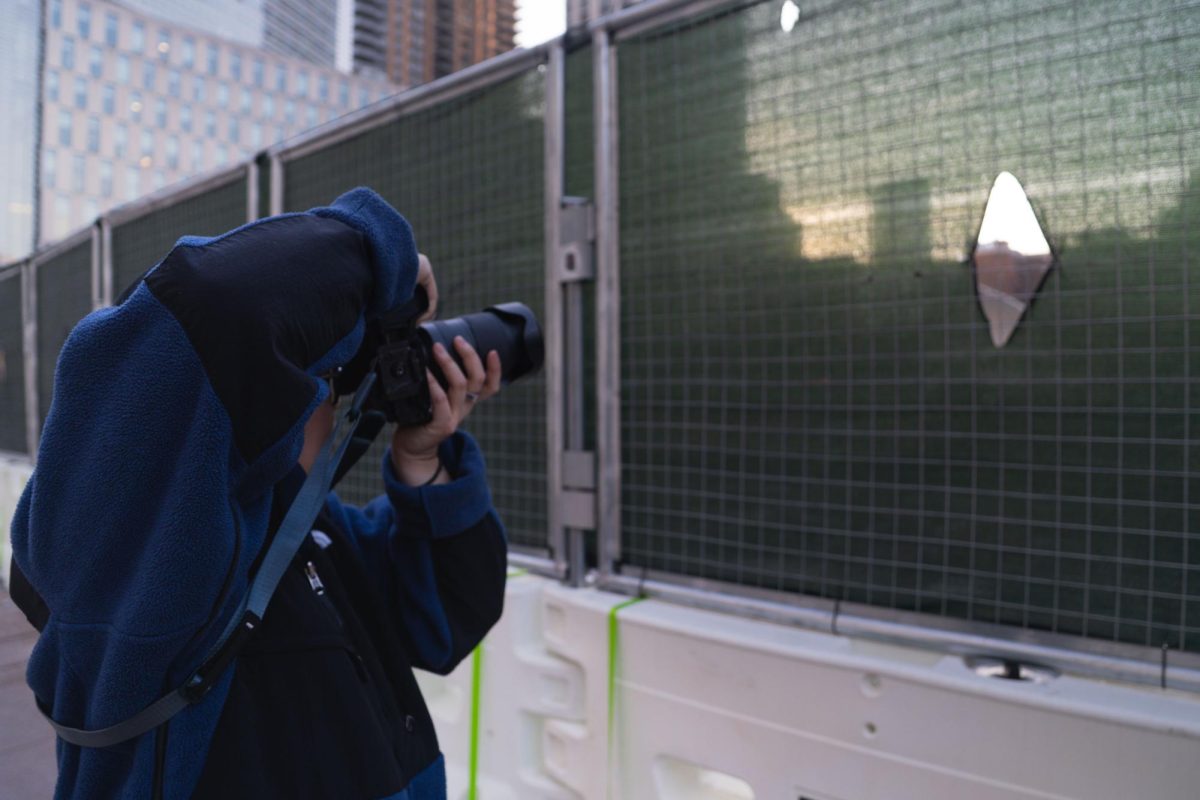
What do you do when you see a beautiful sunset? Or when you see your first spring flower in bloom? What about a horrendous outfit choice on the subway, or a friend momentarily making a funny face? Chances are, your instinct is to take a picture. That reaction is understandable, given the easy access we have to photography. But why should we all feel pressure to be photographers? Sometimes, it’s better to let a moment go by without capturing its image.
The social media panopticon and the constant presence of the phone camera in our back pocket have primed us to take pictures as a first response to any interesting stimulus. We must capture any sight before it’s gone; we must have proof of any extraordinary occurrence in our lives. The more we succumb to this impulse, the more it becomes routine — sure enough, our entire lives play out in our camera rolls.
Taking pictures on an everyday basis is largely unnecessary; committing an interesting image to memory takes a much shorter amount of time. Pulling out a camera diverts the process of image assimilation to a machine, not your mind. Delaying interpretation by relying on a photo lens means that we do not directly contemplate what is in front of us until it’s gone. We can only reflect on images on our screens.
The snapshot has become our form of contemplation, leaving all reflection in the camera roll, in photos that are likely forgotten about until it’s time to clear up your phone’s storage.
One morning, I was walking to a bagel shop near my house after a long night out. I didn’t feel my greatest; I was wearing a haphazardly coordinated outfit paired with unbrushed hair. I was laser-focused on the bacon, egg and cheese ahead of me so I wasn’t paying much attention to my surroundings — that is, until I saw a flash out of the corner of my eye and heard a shutter closing. Some man walking past me had taken my picture — I caught his eyes and the lens just as he walked past.
I was annoyed that the photographer had taken a picture of me without my consent. I know he legally didn’t need it — I was walking on the sidewalk, public property — but it still would have been nice to have a say in the matter, as I would have said no. The imposition of one’s camera lens — and the ability to permanently publish another’s image — is obviously a nuisance to those who might not want their image to extend beyond where they are currently present. Street photography being legal doesn’t change the fact that it can be annoying.
After eating my bagel sandwich, I found myself thinking about what the photo of me looked like. Why did I attract the photographer’s attention? Was he really interested in me as a subject, or was the snapshot an instinctual reaction to seeing someone disheveled and out of place?
This brings me to my second complaint about photography: It turns us into people who see first, think later. When I think about the photo of myself, I think about the photographer returning home, culling through pictures, finding my snapshot and promptly deleting it. There’s no way it was a good picture. The lack of thoughtfulness in the moment, though, is what bothers me the most.
This robotic reaction can also be seen in the omnipresence of phone screens at concerts, as attendees stand on their tiptoes to record the performance going on right in front of them. Or like when I went to see “Guernica,” Picasso’s über famous mural painting about the bombing of the eponymous Basque town during the Spanish Civil War, and I had to wait for tourists with their phone cameras to get out of the way before I could contemplate the painting up close for myself. Never mind the fact that the Museo Reina Sofia has an entire online resource dedicated to the painting, allowing viewers to choose normal, ultraviolet or x-ray scans of the painting. The snapshot has become our form of contemplation, leaving all reflection in the camera roll, in photos that are likely forgotten about until it’s time to clear up your phone’s storage.
I’m not saying we should never take any photos again — I respect the art of photography and enjoy looking at a good picture. However, I think we should all think about leaving camerawork to professional photographers who are dedicated to their craft rather than leveraging photography as a method of commemorating every waking moment of our lives. Let’s all put down our cameras and be comfortable with our eyes, ears and minds — it’s fine to let an interesting sight go uncaptured.