Fordham has announced a new science, technology, engineering and math (STEM)-based honors program at Fordham’s Rose Hill (FRH) campus for the 2026–27 school year. This program is just one of the changes the university is making to expand its STEM initiatives.
Last spring, it was announced that Fordham received a $100 million gift from alumni Maurice and Carolyn Dursi Cunnifie to transform the university’s STEM research programs. The donation will fund the new 200,000 square foot integrated science facility to be built at the FRH campus.
In the fall, alumni Peter Zangari made a $1 million contribution to the university to help advance its growing fund for artificial intelligence (AI) research.
The donations came before University President Tania Tetlow addressed questions during an Oct. 16 student presser regarding Fordham’s move towards becoming a more STEM-focused institution. With the expansion of STEM programs at Fordham, Tetlow said Fordham is increasing its STEM initiatives in order to appeal to students who want to study STEM-based programs.
One of the things that we see as really an integral part of this program is funding students to do research during the academic year and especially over the summer, particularly in those first few years that (students) are at Fordham. Joshua Schrier, Inaugural Director of the FRH STEM Honors Program
According to the Fordham website, the new STEM Honors Program will be a “research-intensive academic experience for outstanding undergraduate students majoring in the sciences, mathematics, and computer science.”
“We do know that something students look to as they’re choosing a school is ‘How selective is that school?’ In the future, as we’re able to build more facilities for STEM, that’s a moment when we might try to grow the undergraduate population because we know that … our applications in STEM are lower than what is typical,” Tetlow said.
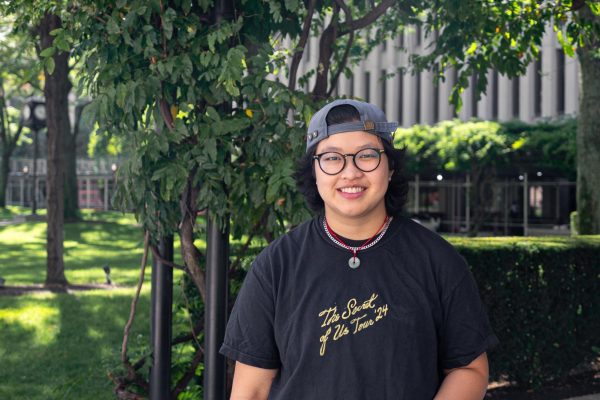
Joshua Schrier, professor of chemistry and biochemistry and inaugural director of the FRH STEM Honors Program, clarified that the $100 million donation to STEM at Fordham would not be used for the honors program, which is funded through other donors. Schrier is also a Kim B. and Stephen E. Bepler faculty chair member. The professorship was designed to advance Fordham’s commitment to STEM education.
“The advancement office has been in touch with donors who have been very supportive of this program,” Schrier said. “One of the things that we see as really an integral part of this program is funding students to do research during the academic year and especially over the summer, particularly in those first few years that (students) are at Fordham.”
It’s a new pilot program, so we’re working to recruit the first cohort of incoming first-year students to begin in the fall, but then we are also backfilling the program a bit, by trying to work with the departments here to identify first-year students who might also be a good fit Joshua Schrier, Inaugural Director of the FRH STEM Honors Program
Schrier explained that the new STEM program will be the fourth honors track at Fordham.
“There’s an honors program that runs at Rose Hill, and then there’s a Gabelli honors program, and they’re all organized in slightly different ways,” Schrier said. “This STEM honors program is a fourth honors program added onto this pile.”
The incoming cohort will be made up of 15 students. According to Schrier, the class of 2029 will also be eligible to join the STEM Honors cohort their sophomore year.
“It’s a new pilot program, so we’re working to recruit the first cohort of incoming first-year students to begin in the fall, but then we are also backfilling the program a bit, by trying to work with the departments here to identify first-year students who might also be a good fit,” Schrier said.
Schrier added that, to be considered for the program, prospective students need to show a demonstrated interest in STEM-related subjects.
“We’re really looking for students that have two things that are different: One is that they express some form of an interest in doing science or doing research,” Schrier said. “The other thing that we’re looking for is some sort of leadership or entrepreneurship-type experience.”
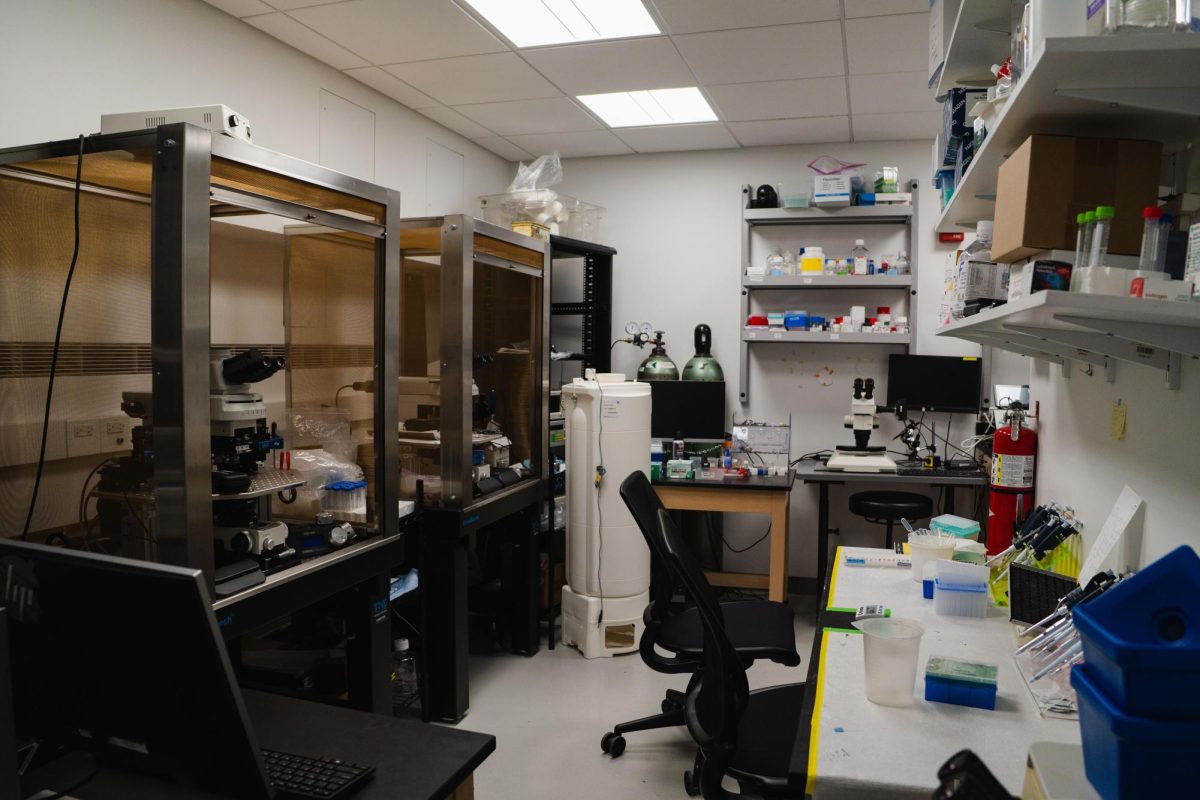
The program’s curriculum will combine introductory lecture and laboratory classes for STEM subjects. Students will need to be working towards completing a major in biology, biochemistry, chemistry, computer science, environmental science, mathematics, neuroscience or physics.
The program’s strong emphasis on research makes it an excellent fit for research-oriented students, while it may be less aligned with a purely pre-health–focused curriculum. Fordham University Website
The website notes, “The program’s strong emphasis on research makes it an excellent fit for research-oriented students, while it may be less aligned with a purely pre-health–focused curriculum.”
Schrier noted that the STEM Honors Program shares similarities with the Gabelli honors program, particularly in terms of its curriculum.
“It’s really a lot like the Gabelli honors program. … With regards to the core, students in the STEM Honors Program take the same undergraduate student core, so there’s really no difference there,” Schrier said. “Additionally, like the Gabelli honors program, students are expected to take a sequence of introductory science courses or business courses through what we’re calling the ‘honors sections.’”
According to Schrier, the idea of a STEM Honors Program has been in the works for a while.
“It’s something that has been in the works for over a decade, in fact, I read a committee report that was done, almost a decade ago, more than a decade ago, exploring this idea,” Schrier said.
Fordham has also made efforts outside of campus to build STEM initiatives. The University is a member of the Bronx Science Consortium (BSC), a partnership of Bronx-based research and cultural institutions aimed at promoting scientific research, education and collaboration.
Schrier then went on to explain that the program has advanced due to support from Maura Mast, former dean of Fordham College at Rose Hill and Jessica Lang, dean of arts and sciences.
“I mean the idea for this program was really sort of advanced by the former Dean of Fordham College at Rose Hill, Maura Mast, and now is sort of being advocated for by Dean Jessica Lang, who’s the Dean of Arts and Sciences,” Schrier said.
Fordham has also made efforts outside of campus to build STEM initiatives. The University is a member of the Bronx Science Consortium (BSC), a partnership of Bronx-based research and cultural institutions aimed at promoting scientific research, education and collaboration. Four other institutions also make up the BSC: Albert Einstein College of Medicine, the Bronx Zoo/Wildlife Conservation Society, Montefiore Health System and the New York Botanical Garden. The group collaborates on research initiatives like the annual BSC Poster Symposium, which showcases scientific work in biology, medicine and environmental science.
The Fordham website states, “The Consortium hopes to attract new funding sources and bring more resources to the Bronx – a vibrant but health and economically challenged section of the country.”
Fordham students have the opportunity to intern with these institutions during the school year and summer, and attend special events and symposia, gaining exclusive insights into new scientific research and practices.
I think it’s really an opportunity for students that have an interest in research to double down on that, and we really hope, through the way that this has been structured, that it’s also not just a program that benefits a small subset of students at Fordham, but it actually builds the STEM research culture more broadly. Joshua Schrier, Inaugural Director of the FRH STEM Honors Program
There is no designated space yet for the STEM Honors Program at FRH, but Schrier has been working closely with the Office of Residential Life to incorporate the honors program into a Science Integrated Learning Community (SILC) at FRH. The community is open to both freshman and upperclassman students and is located at Martyrs’ Court Jogues residence. It provides “Learning Inside and Outside of the Classroom” opportunities, according to the website.
“We are working with (the Office of) Residential Life to give students in this program the opportunity to live in the science integrated learning community, or SILC, which already exists for other students who are interested in sciences,” Schrier said.
Schrier emphasized that the program is a good opportunity to help increase STEM-based programs and research at Fordham at large, not just for STEM students.
“I think it’s really an opportunity for students that have an interest in research to double down on that, and we really hope, through the way that this has been structured, that it’s also not just a program that benefits a small subset of students at Fordham, but it actually builds the STEM research culture more broadly,” Schrier said.
As it stands, the STEM Honors Program is located at Rose Hill. Schrier did not mention any plans to expand the program’s facilities to the Lincoln Center campus.