

As a Fordham Lincoln Center student who has had the privilege of studying abroad in both Rome and London, immersing myself in European life and culture has broadened my horizons in ways I would have never imagined possible. Visiting new cities has not only allowed me to see beautiful places and take breathtaking photographs, but it has also given me the opportunity to understand locals at a deeper level and to experience unique lifestyles.
We are all familiar with the stereotypes that people tend to have about Europeans, such as the French being “rude” and the Germans being “cold,” but the reality is that the continent is rich with incredible types of people from many cultures and simply cannot be generalized in such a fashion. A Reader’s Digest survey showed that 61% of European respondents noted they often find American tourists to be arrogant because they often expect Europeans to know English, while 30% think they dismiss traditional customs. Nevertheless, that same study revealed 64% of Europeans also find Americans to be friendly, and 32% find them to be fun individuals. While unpleasant people will always exist in every crevice of the world, there are ways that, as tourists, we can recognize what we interpret as discourtesy may just be cultural dissonance.
The most important rule of thumb to remember when traveling is that it is better to try and begin a conversation with locals in their native language. A simple, “Ciao, come stai?” interaction with a waiter at an Italian restaurant in Rome had a much more positive impact on my experience studying there than starting with “Hi.” The distinction may seem insignificant, but although English is seen as a universal language, studies show that less than 20% of people worldwide are fluent. It is important to take into account that around 200-300 languages are spoken in Europe, with the EU having 24 official languages.
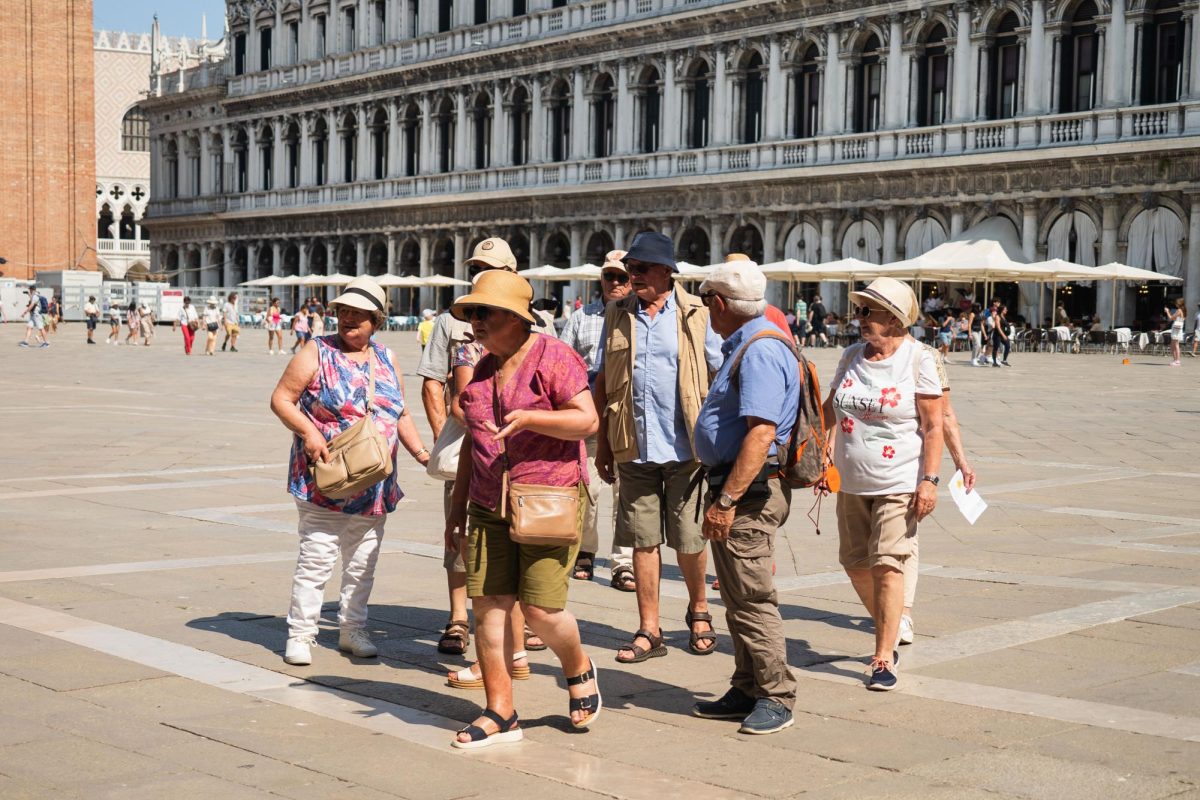
You don’t need to know a foreign language at a professional level in order to communicate with the people who speak it. However, memorizing a few phrases and taking the necessary steps to learn the pronunciation of words before communicating with others will enhance your conversation, along with the listener’s comprehension. Code switching is usually seen as a sign of respect by Europeans, as it can show them you recognize and value their traditions.
Following popular tourist recommendations that they see trending on TikTok or Instagram rather than exploring for themselves is often a major reason why some tourists are displeased with their visits and interactions with locals. One must do their research when it comes to places to visit and restaurants to dine at. Make sure to check Google or Yelp reviews and translate the ones left by locals to see what they have to say.
It’s easy to fall for the embellished tourist traps that metropolises like Rome and Paris have to offer. However, locally-loved areas are the hidden gems of every city, and will make your ventures around Europe all the more special. You will also get the opportunity to meet and speak to inhabitants and get to know important details such as what dishes they like to eat and what their dining etiquette consists of.
The time at which you eat a meal can also matter in a European city. Authentic Italian restaurants in Rome are open from the morning to around 3:00 p.m. and reopen around 7:30 p.m. until late at night. The majority of Romans tend to eat dinner around 9:30 p.m. Restaurants that stay open all day and have large, ornate menus scattered around the area are usually tourist traps that serve lower-quality food for higher prices.
Exposure to these unique settings will allow you to meet a myriad of people from everywhere, which will allow you to truly get to know all kinds of Europeans.
Europe consists of many walkable cities that hold multiple historical landmarks in close proximity to one another. In Paris, the Eiffel Tower is only a half-hour walk from the Arc de Triomphe du Carrousel, and along the way, you can see the Seine River and many different museums and works of Parisian architecture. The Avenue des Champs-Élysées, close to where you will reach the Arc de Triomphe, is a huge shopping center filled with various stores and cafés.
If long walks are not preferable to you, European public transportation is convenient for visiting multiple sights at once. The RER C train, which belongs to one of the five lines of Paris’ Regional Express Network, stops at the Eiffel Tower, Notre-Dame de Paris and Château de Versailles all in one line.
One thing that makes traveling around Europe so exciting is the variety of international public transportation that is so easily accessible. From London, Brussels is only two hours away, and from there, Luxembourg City is another two and a half hours away. Exposure to these unique settings will allow you to meet a myriad of people from everywhere, which will allow you to truly get to know all kinds of Europeans.
Before studying abroad, I never thought I would visit Luxembourg City or Kraków, Poland, but they ended up being two of my favorite destinations in Europe. I was able to visit the entirety of Luxembourg City with its free public transportation and was encircled by alluring nature and architecture through my endeavors. In Kraków, I learned a lot about Polish history and culture from the Gothic and Baroque-style historical monuments and buildings stretching across the center.
As Americans, we tend to live very fast-paced lives that consist of small talk with those around us and structured planning. In general, Europeans like to take it easy and prioritize unwinding with their coffee breaks and leisure activities. Even the work-life balance in countries like Spain and Italy allows employees to have a generous amount of free time, as cultural and local events are prevalent and social activities in the workplace are implemented.
Grasping these slight variations in dialogue is crucial to truly absorb the environment around you.
A Harvard research article addressed the American Working Conditions Survey, which conveyed that U.S. workers have adapted to the fast-paced, burnout working culture, with approximately half of respondents reporting they face relatively unpleasant and even dangerous working conditions in their daily tasks. This intense approach to working is uncommon among Europeans and differs greatly from their job practices. Learning to appreciate the time a tourist has to themself while in Europe is how one can fully enjoy their stay.
After having spent a semester in Rome and traveling on the weekends, following these rules while now living in London has become much easier and has made my travels more enjoyable. I have learned to value the time I have been given to myself to fully explore where I am and get to know the people around me on a more personal level. Londoners are rather friendly, and politeness is significant in conducting daily interactions. In London, it is absolutely essential to say “thank you,” “I’m sorry” and “please,” with communication often being indirect instead of literal. Grasping these slight variations in dialogue is crucial to truly absorb the environment around you. Doing so continuously has made me absolutely adore London and its people and feel at home.
Adjusting to a foreign setting can be difficult, but it’s important to recognize the culture shocks and obstacles we may encounter when traveling abroad and learn how to tackle them. Being able to live in more than one European city has given me opportunities to meet so many wonderful people from countless backgrounds and find those that resonate most with me. It has challenged my past perspectives and enriched my mind culturally and educationally, for which I will always be grateful. It’s imperative to give traveling to different areas more than just one chance, as there is so much worth knowing about other regions and their people, just as it is valuable to get to know us Americans. The prejudices that exist about us do not define who we all are. Try to visit countries that people are inclined to stigmatize. You might make lifelong friends in those places that you wouldn’t have previously expected to.