COLUMN: (De)mystifying Mental Health
I begin this piece with the assumption that there have been — and will continue to be — countless attempts by individuals to understand themselves and how they relate to others. More precisely, I believe that humans have taken extraordinary efforts to represent themselves to the world and the world for themselves. Among these approaches to representation — of the self and of the other, of the interior and of the exterior — I would like to place two rather nebulous categories: psychoanalysis and poetry.
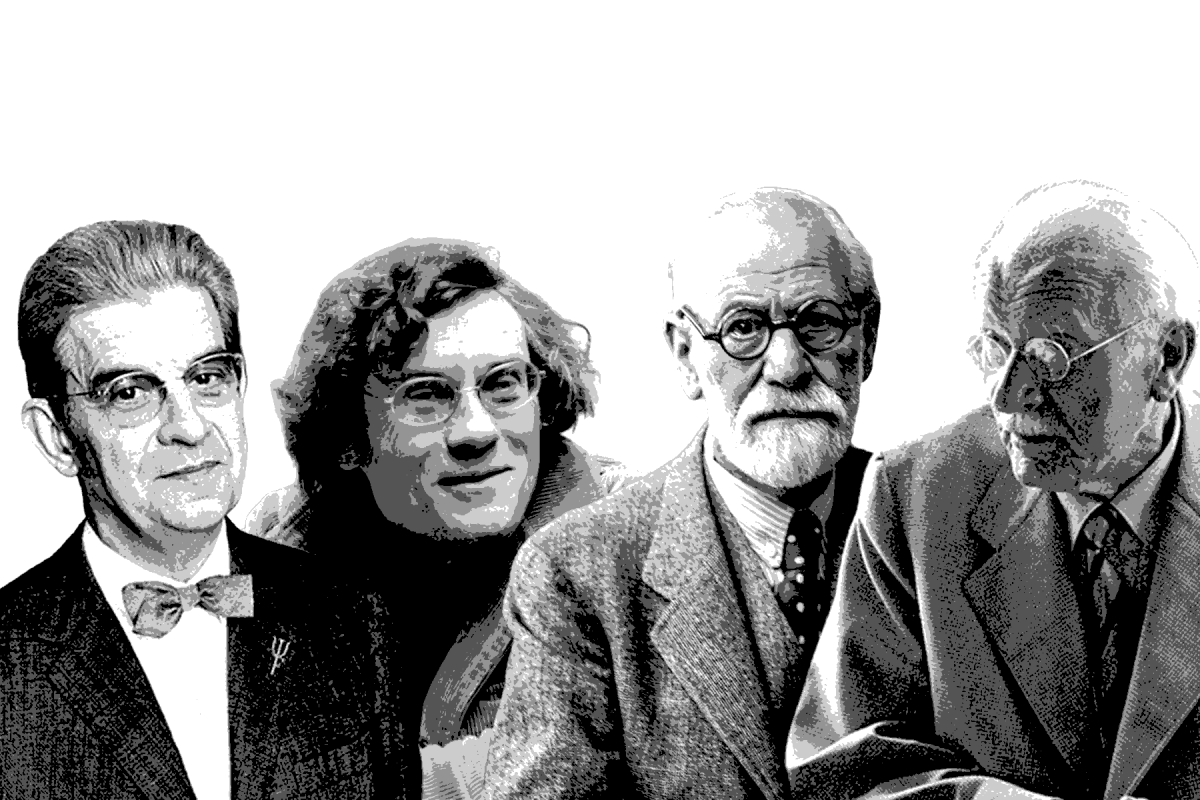
Broadly speaking, the story of psychoanalysis begins with Austrian neurologist Sigmund Freud, who is often described as being the intellectual movement’s “founder.” In their 2023 paper “An Introduction and Brief Overview of Psychoanalysis,” psychiatrists Martin Tarzian and Mariana Ndiro, along with cellular biologist Adegbenro O. Fakoya, write that Freud’s most revolutionary ideas were made manifest through his book with fellow physician Josef Breuer, “Studies in Hysteria.” Tarzian et al. write that it was in this collaboration that “Freud finally derived his groundbreaking theory about ‘The Unconscious,’ proposing that repressed memories and desires influence behavioral and emotional states.”
Also to be noted among Freud’s ideas is his tripartite model of the mind; in his view, the mind is solely composed of the id, ego and superego. Tarzian et al. write that, according to Freud, the id is “the source of our unconscious thoughts and wishes and operates on the principle of immediate gratification,” while the ego “serves as the rational and conscious aspect of the psyche, acting as a mediator between the id’s demands and the realities of the external world.” A touch more slippery to define, Freud’s superego “symbolizes the internalization of societal norms and values,” and is somewhat analogous to a conscience. Setting aside the specifics, Freud’s assertions regarding the structure of the mind are incredibly ambitious: He attempts to reduce — and subsequently represent — all mental experience into three, finely divided components. It is on this task — that of representing experience into a well-structured entity that we may more easily come to grips with— that I wish to focus on in this piece.
I argue that contemporary poetry, in general, concerns itself with this very same quest. In an article published in Poetry Magazine, American poet and essayist Tony Hoagland examines the growing resistance to conventional narrative in contemporary poetry.
“Because narrative imposes a story upon experience, because—the argument goes—that story implicitly presents itself as the whole story, some readers object to the smugness and presumption of narration.” Tony Hoagland, American Poet and Essayist
“Not only is organized narration considered inadequate to contemporary experience, its use is felt by some to be oppressive, over-controlling, ‘suspiciously authoritarian,’” Hoagland writes. “Because narrative imposes a story upon experience, because—the argument goes—that story implicitly presents itself as the whole story, some readers object to the smugness and presumption of narration.”
This narrative nausea of form and content is best experienced through reading the works themselves. Hoagland centers his essay around Mark Halliday’s “Couples” and Matthea Harvey’s “First Person Fabulous”; I have choices of my own.
Chris Forhan’s “Atonal Breakdown” laments the loss dealt by cognition. He writes of the troubles that subjectivity brings on account of its endless answer-seeking. The motif “I was born happy, not knowing about what” is repeated throughout the poem. Forhan’s inarticulable topos is best summed up through his own stanzas; he writes “flowers — nasturtium, / delphinium, whatever, so sweet, so strange — / when did I begin to see them / as silent accusations against me?”
Flowers cease to be “flowers” — they are entities unable to be grasped fully by the subject. A similar notion is explored by Erika L. Sánchez in her poem “Memories of No Consequence.” Sánchez puts forth images related only by their placement in this work. No link is forged in the poem itself — this task is left to the reader. This presentation, or representation, of the poem’s “raw material” — of the poet’s (almost) unmediated experience — mirrors our own experience of everyday life; meaning is not obvious, let alone graspable in the present.
I find that this crisis of complete representation is equally present in disagreements between different psychoanalytic theories.
Articulating this idea more explicitly is “Map” by Polish poet and Nobel Prize winner Wisława Szymborska. Szymborska describes the sensation of looking at a map on a table — a representation that contrarily hides more than it shows.
“I like maps, because they lie. / Because they give no access to the vicious truth,” she writes. “Because great-heartedly, good-naturedly / they spread before me a world / not of this world.”
I find that this crisis of complete representation is equally present in disagreements between different psychoanalytic theories. Returning to Freud, his splitting of the mind into three completely distinct components is one of the most heavily disputed of his ideas. Even Freud’s own students, in the period immediately following his groundbreaking work in the early 20th century, developed models that contrasted greatly with his original ideas.
Swiss psychoanalyst Carl Jung partitioned the mind into three different components: the conscious, that of which we are immediately aware; the personal unconscious which includes our memories, emotions and all that we as individuals have experienced, but are not necessarily actively thinking about; and the collective unconscious. Jung’s collective unconscious posits a shared well of symbols and images that are common to all humans. This model differs greatly from Freud’s emphasis on psychosexual development, instead placing an emphasis on various archetypes in lieu of familial dynamics.
Tarzian et al. summarize Karen Horney’s challenges to the Freudian model, writing that “Horney believed that cultural and societal factors played a significant role in shaping personality, whereas Freud’s psychoanalytic theory focused primarily on the individual psyche.” Horney focused particularly on the role of “basic anxiety,” which she describes as “the feeling a child has of being isolated and helpless in a potentially hostile world.”
Psychoanalytic theories have only grown more diverse following the generation of Freud’s immediate students. Jacques Lacan focuses on the relation between the self and other, with philosopher Adrian Johnston noting in the Stanford Encyclopedia of Philosophy that Lacan believed “that the imagistic nucleus of the ego is suffused from the get-go with the destinal ‘discourse of the Other.’” Put simply, the ways in which we view ourselves are always shaped by the ways in which others view us.
Johnston also highlights the importance of Lacan’s seminars in the development of psychoanalysis in the latter half of the 20th century. He writes that “from 1964 onwards, Lacan’s audience startlingly increased in both sheer numbers and breadth of backgrounds, with artists and academics from various disciplines across academia joining the more clinically-minded attendees.”
“In his seminars, Lacan deftly maneuvered within and between a multitude of theoretical currents, putting psychoanalysis into conversation with the history of philosophy, phenomenology, existentialism, structuralism, post-structuralism, feminism, and, as already indicated, just about every discipline represented in the university,” Johnston says.
I believe the (nearly) overwhelming diversity of psychoanalytic theories and models is a site where we gain insight into the manifold nature of knowing ourselves.
Striding in a different direction is the work of fellow French psychoanalyst Felix Guattari. Continuing the chain of former students breaking away from the assumptions of their teachers, Guattari places social relations at the heart of psychic development. In an introduction to Guattari’s posthumously published book “Psychoanalysis and Transversality: Texts and Interviews 1955-1971,” philosopher and collaborator Giles Deleuze writes that “Guattari early on had the intuition that the unconscious is directly related to a whole social field, both economic and political rather than the mythical and familial grid traditionally deployed by psychoanalysis.” Indeed, the speed at which daily life now moves has blurred — daresay annihilated — the barrier between the personal and public.
Drawing on this description, I turn back to poetry and its representation of the self — and by virtue of this, all that is not encompassed by the self. Like the thinkers alongside Freud and Lacan, the poets featured in Hoagland’s article and those I selected above are not without predecessors nor contemporaries.
I first think of Donald Allen’s landmark anthology “The New American Poetry: 1945-1960,” mainly with reference to the section covering poets of the Black Mountain School. Named for the college from which the principle figures in the movement hailed, the Black Mountain School likewise prioritizes the individual’s wading through the world above all else, seeking to present the world without “the lyrical interference of the individual as ego, of the ‘subject’ and his soul,” writes Black Mountain poet Charles Olson in his manifesto “Projective Verse.”
Among the selections of Allen’s anthology is “The Third Dimension” by American poet Denise Levertov, wherein she describes the disconnection between her subjective experience and the ability to convey it. Her work begins with the yearning “Who’d believe me if / I said ‘They took and / split me open from / scalp to crotch, and / still I’m alive.” Levertov grieves the impossibility of true one-to-one communication, lamenting that “Honesty / isn’t so simple: / a simple honesty is / nothing but a lie.”
Honesty — clarity in truthtelling — exists imprecisely for Levertov; there is only so much that can be conveyed from one self to another. Returning to the road I first set out on in this piece, I believe the (nearly) overwhelming diversity of psychoanalytic theories and models — along with the personal struggles to apprehend lived experience as articulated by the countless poems and other works of storytelling — is a site where we gain insight into the manifold nature of knowing ourselves. In other words, the innumerable models of knowing the world — including those not covered here like sociology and cultural anthropology, religions and other modes of spirituality, and varied political structures — point to the personal, individualized nature of what it means to live as an individual, as a subject.
Grappling with this information in its totality, I believe this exercise in enumeration sheds light on the nearly infinite diversity of belief structures there are in the world. Though I have only presented a few — and only on their very surfaces respectively — I presume that continually tapping into and exploring varying — and even contradictory — ideas is an important part of maintaining one’s mental well-being. For every individual bit of information that is represented in words, poetry, images and beyond, there is a counterpart that is buried and hidden. Only through embracing this infinitude may we come close to a lasting mental comfort.