
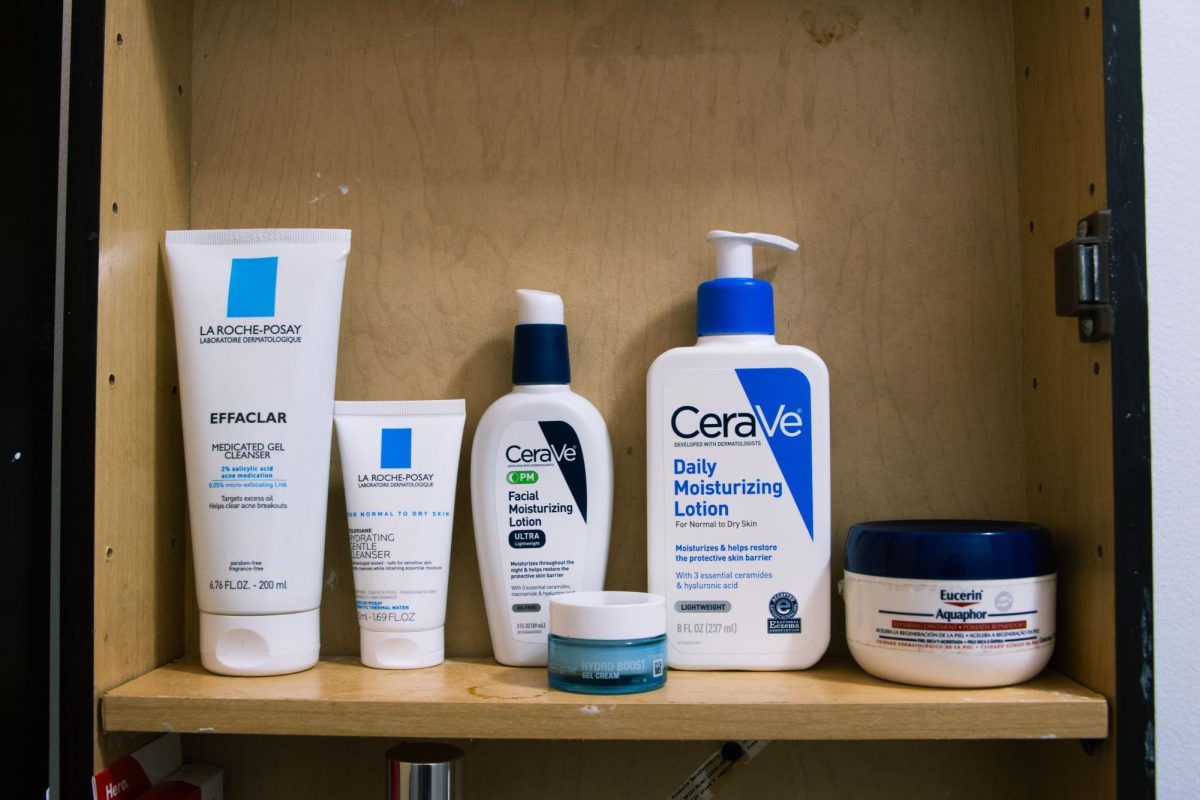
As someone who has chronically dry skin, I have always hated winter. The harshly cold winds, resurgence of indoor heating and typical end-of-semester stress usually combine forces to turn my face into a patchwork of irritated and cracked skin. While the holiday season typically finds people looking forward to the first snowfall, I am usually more worried about the flakes of peeling skin falling off my face.
This year, however, I found the key to preventing dry skin: Maintaining healthy skin is not about the products you use, but the consistent procedure you keep up. No matter what your skincare routine is, here are a few changes that might help you keep your skin happy in dry conditions.
When you find your skin is starting to develop dry spots, it likely means that the skin barrier of your face has been compromised. Your skin barrier, the outer layer of your skin composed of lipids, protects you from harmful bacteria and retains moisture. The weaker your skin barrier is, the less moisture it can retain and the more likely it will show irritation; it is common for this to happen during New York City winters due to the habitually dry indoor and outdoor conditions. Psychological stress can also worsen the degradation of the skin barrier.
The first step I recommend is to stop using any irritating products that usually form a part of your skincare routine.
Formerly, my response to parched skin was to moisturize on an ad hoc basis — last winter, I carried a tub of expensive moisturizer in my backpack and reapplied cream between my classes to no avail. This year, I decided to change course — as soon as I felt cracking at the corners of my lips, I stopped what I was doing and strategized as to how I would immediately nourish my skin barrier.
The first step I recommend is to stop using any irritating products that usually form a part of your skincare routine. This usually includes acne-prevention products, like the topical medication prescribed to me by my dermatologist. Pausing a quotidian skincare routine can understandably make one nervous — at first, I personally did not want to stop using my acne-preventative creams for fear of returning breakouts.
However, it is important to remember that these acne medications work by making your skin lighter and quicker to repair itself, causing it to be more sensitive to damage — that is why you are always warned to apply copious amounts of sunscreen during treatment). The instructions on the backs of these products recommend that you pause using them immediately if your skin shows signs of irritation. Take it from me, this is a warning you want to pay heed to. Although these products might help you with acne during the warmer and more humid months, they will only exacerbate dry skin.
Applying moisturizer on damp skin rather than dry skin greatly improves the absorption of moisture on your face.
Once you have put your irritating creams to the side, I recommend researching gentler products that can temporarily replace your usual mainstays. In order to rebuild the skin barrier, it is recommended to simplify your skincare routine so as to not interfere with your skin’s natural regeneration process.
I bought only two new products to replace my former rotation of cleansers and creams — the first was a La Roche-Posay cleanser geared towards sensitive skin, and the second was a Neutrogena gel cream containing hyaluronic acid. A water-based cleanser with few other ingredients is useful because it removes dirt and other pore-clogging detritus that builds up on your skin without stripping it of its natural oils, that help to keep your skin moisturized. Hyaluronic acid is a recommended ingredient for moisturizers because it is especially adept at maintaining water molecules on your skin.
The night I began my new routine, I tried out a new moisturizing strategy. I did not wait until my face was dry to use moisturizer — as soon as my face was not soaking wet, but still damp, I gently rubbed in my usual nighttime heavy-weight moisturizing cream, made by Cerave. Applying moisturizer on damp skin rather than dry skin greatly improves the absorption of moisture on your face; even expensive moisturizers are rendered impotent when applied to fully dry skin.
Before I went to sleep, I covered my face in petroleum jelly in a practice known as “slugging.” Although going to bed with a greasy face might seem ridiculous, applying the jelly to your freshly moisturized skin helps protect the skin barrier as it rebuilds itself through the night. Slugging should only be done on skin that has not been treated with irritating ingredients, another reason why it is important to pause acne-preventative rinses or creams. If you have very acne-prone skin, it might not be the best idea to practice slugging, as it risks clogging your pores. However, despite my own acneous history, I did not break out at all — just in case, I applied acne patches on developing pimples before applying the jelly.
There is no reason to change the frequency of your hair-washing — which usually varies based on hair type — to combat dandruff.
Just one night of slugging left my face rejuvenated — the red, itchy parts had disappeared, the cracking on my lips had abated and I could find no flaky skin. I used Aquaphor’s Healing Ointment — a petroleum jelly with added ingredients such as glycerin — to slug, but any typical petroleum jelly will do the trick. After I slugged my entire face for one night, I have found that it is only necessary to apply the jelly to the especially sensitive parts of my face, such as my eyelids, nostrils and mouth, to maintain upkeep.
As smothering your face in petroleum jelly before you go to sleep might understandably make a bit of a mess, I recommend slugging on a night when you know you will be able to wash your hair immediately after waking up. The conditions that exacerbate dry skin also tend to cause dandruff, so after my first night of slugging, I took advantage of the necessitated hair wash and used a new anti-dandruff shampoo to combat the dry skin on my scalp.
Dandruff is a different challenge to vanquish — in this case, investing in a good shampoo that is geared to moisturize your scalp is highly worthwhile. There is no reason to change the frequency of your hair-washing — which usually varies based on hair type — to combat dandruff. The trick is consistently using anti-dandruff shampoo every time you decide to wash your hair. My strategy is to use my anti-dandruff shampoo first, letting it sit on my scalp for a few minutes before rinsing. Then, I proceed with my usual shampoo and conditioner, albeit in smaller amounts than usual so that I do not deprive my scalp of its natural oils.
Although I had originally thought of my skincare routine overhaul as a first step toward moisturized skin, I was surprised to find that cuts, rather than additions, to my routine were the only changes I needed to make. I only needed to buy three products total — the cleanser, gel and shampoo — to replace the six products that I used daily during warmer, more humid months. Intentionally strategizing which products I would take up for winter only took me one trip to Target, and my morning and nighttime skincare routines have actually gotten shorter than usual.
The key to keeping your skin moisturized is not overloading it with expensive products, but instead being smart about which products you use and when. One night of intensive work on your skin barrier is enough to keep your skin nourished and glowing through the winter months if you keep up with maintenance.